Doctor-Led Procedure Jaipur • Sikar • Ajmer

FUE Hair Transplant in Jaipur | Follicular Unit Extraction

FUE moves your own DHT-resistant hair, one follicular unit at a time, from the back and sides of the scalp to areas that have thinned. It leaves tiny dot marks instead of a linear scar, is done under local anaesthesia as a day-care procedure, and is planned and performed by our doctors in Jaipur, Sikar and Ajmer.

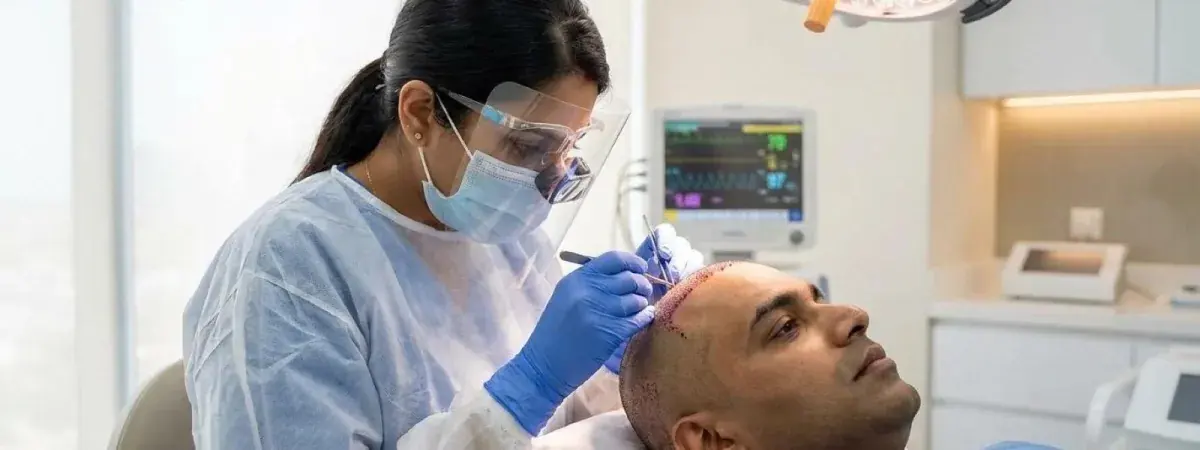
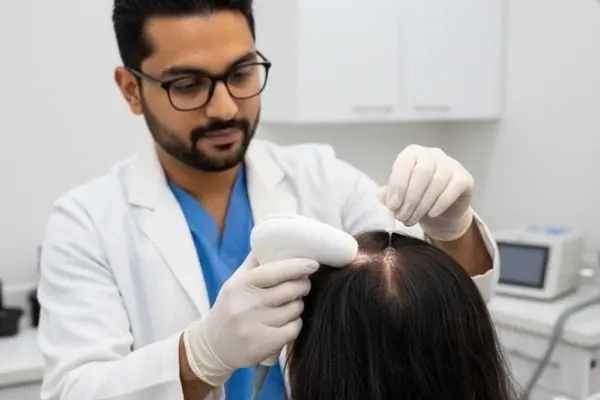
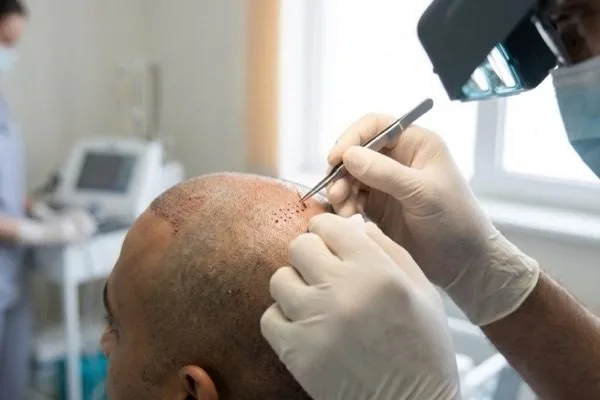
Doctor placing hair grafts into the crown during an FUE hair transplant
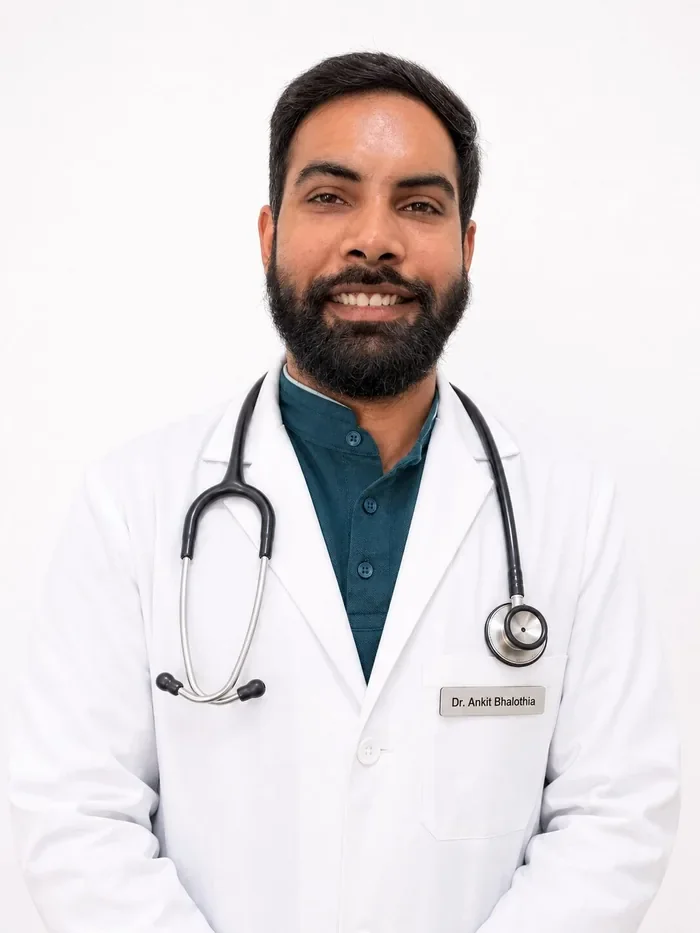
Dr. Ankit Bhalothia

Medically reviewed by Dr. Ankit Bhalothia, Aesthetic & Hair Transplant Surgeon · Last reviewed

The Technique

What Is an FUE Hair Transplant?

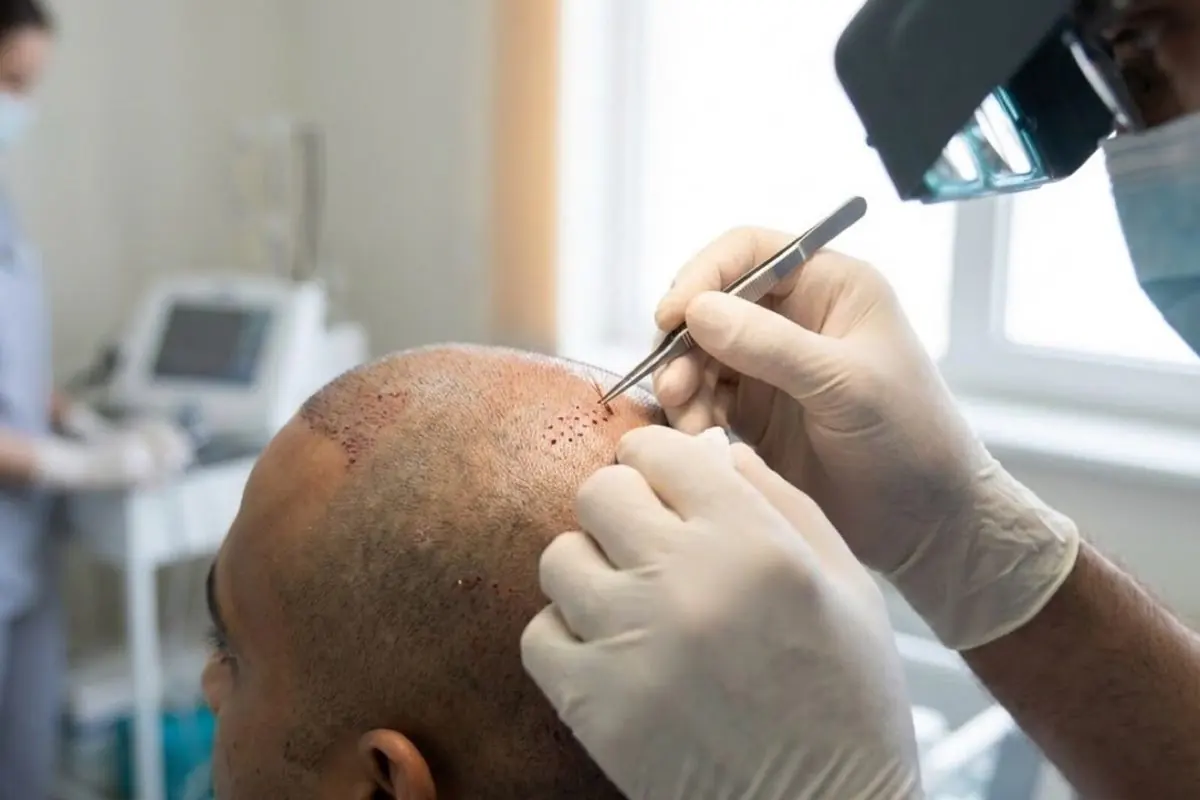
Follicular unit extraction (FUE) is the most widely used hair transplant technique today. Hair grows in natural groups of one to four hairs called follicular units. In FUE, the doctor removes these units one by one from the donor area at the back and sides of your head, using a micro-punch roughly 0.7 to 1.2 mm wide, and implants them where the hair has thinned.

Hair in the donor area is genetically resistant to DHT, the hormone behind pattern baldness, so transplanted follicles keep growing in their new place. Because every graft is taken individually, FUE avoids the long linear scar of the older strip method (FUT): the donor area heals with tiny dot marks that are usually hidden under short hair.

FUE can treat a receding hairline, a thinning crown or the whole top of the scalp. The same extraction method is used for DHI, beard transplants and eyebrow transplants.

In Short:

  • Your own hair: grafts come from your permanent donor area, so there is nothing to reject.
  • No linear scar: tiny dot marks heal and hide under short hair.
  • Day-care surgery: done under local anaesthesia; you go home the same day.
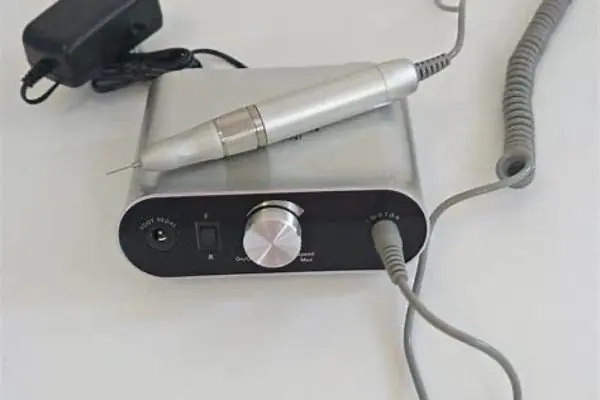
Micro-motor unit with a fine punch handpiece used to extract FUE grafts
Why FUE

Benefits of an FUE Hair Transplant

Natural Hairline

Single-hair grafts go at the front and fuller grafts behind them, following the angle and direction of your own hair.

Minimal Scarring

Individual extraction leaves tiny dot marks instead of a line, so short haircuts stay an option.

Your Own, Lasting Hair

Grafts come from your permanent donor zone, so they keep growing and can be washed, cut and styled normally.

Quick Return to Work

Most people are back at desk work in 3 to 4 days, and the small scabs clear in about 1 to 2 weeks.

Flexible Donor Use

Scalp hair can also rebuild beards and eyebrows, and beard hair can add donor supply when the scalp alone is not enough.

Planned Follow-Up

Reviews at 1, 3, 6 and 12 months track your growth and help protect the hair you still have.

Suitability

Who Is a Good Candidate for FUE?

A good result depends on a healthy donor area and hair loss that is stable enough to plan around.

FUE usually suits you if

  • You have male or female pattern hair loss and a healthy donor area at the back and sides
  • Your hairline is receding, your crown is thinning, or both (see the Norwood scale)
  • You like to keep your hair short and want to avoid a linear scar
  • You want to repair an old strip scar or improve an earlier transplant
  • You have realistic expectations about density and can follow the aftercare

It may be postponed or not advised if

  • Your donor area is too thin to supply the grafts you need
  • Your hair loss is still changing quickly, which is common in the early twenties
  • The cause is active alopecia areata, a scarring alopecia or another condition that needs medical treatment first
  • You have a medical condition that is not under control, such as uncontrolled diabetes or a bleeding disorder

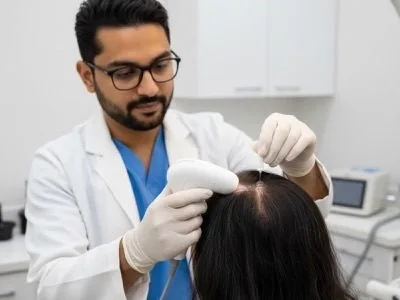
Not sure where you stand? Start with a hair loss consultation. The doctor examines your scalp with trichoscopy and tells you honestly whether a transplant, PRP, GFC or medicine is the better first step.

Procedure

How an FUE Hair Transplant Is Done

Most sessions take 4 to 8 hours, depending on the number of grafts. You stay awake and comfortable throughout.

01 Doctor marking a new hairline before FUE surgery

Consultation & Hairline Design

The doctor checks your donor density with trichoscopy, estimates the grafts you need and draws a hairline that suits your face and age.

02 FUE grafts being extracted from the donor area with a micro-motor punch

Numbing & Graft Extraction

After local anaesthesia, follicular units are removed one by one with a micro-motor punch and kept in a chilled storage solution.

03 Recipient sites being created with a sapphire blade

Recipient Sites

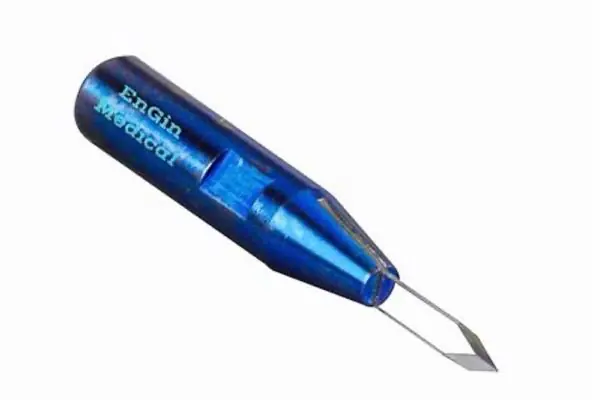
Tiny slits are made with fine sapphire or steel blades, set to the angle, direction and depth of your natural hair.

04 Follicular unit grafts being implanted into the recipient area

Graft Implantation

Grafts are placed into the slits with fine forceps. The doctor checks the result and explains your medicines, washing and review dates.

Recovery

FUE Recovery & Results Timeline

Hair grows in cycles, so the result builds gradually over about a year.

D3

Days 1 to 3: Rest

Mild swelling or tightness is common. Sleep with your head raised, take the prescribed medicines and start gentle washing around day 3 as instructed.

W2

Weeks 1 to 2: Scabs Clear

Small crusts around each graft wash away in 7 to 14 days. The donor area heals and is soon hidden as the hair grows back.

M1

Weeks 2 to 6: Shedding

Most transplanted hairs shed. This is expected: the roots stay in place and restart growth.

M4

Months 3 to 4: New Growth

Fine new hairs appear and slowly thicken. Hair grows about 1 cm a month.

M12

Months 12 to 18: Final Result

Density and texture mature. The crown can take a few months longer than the hairline.

Medical Note: Results vary from person to person. This page is general information from Kezza Hair & Skin Clinic and is not a substitute for a consultation with a doctor.

FUE, FUT or DHI: how FUE compares

All three techniques move your own follicles from the donor area to the thinning area. They differ in how the grafts are taken and how they are placed, which affects scarring, speed and the kind of case each one suits best.

FUEFUT (strip)DHI
How grafts are takenOne by one with a micro-punchA thin strip of scalp is removed and divided into graftsOne by one, as in FUE
How grafts are placedSites made first, grafts placed with forcepsSites made first, grafts placed with forcepsAn implanter pen makes the site and places the graft together
Donor scarTiny dot marksA fine linear scarTiny dot marks
Often suitsHairline, crown and larger sessionsLarge cases where short hair is not a concernHairlines, small areas and dense packing

For most people who want to keep their hair short, FUE is the starting point. Your doctor may suggest DHI for a hairline or a combination of the two. Our FUE vs DHI guide explains the choice in more detail.

How many grafts will you need?

The number of grafts depends on the area to be covered, your stage of hair loss, the density of your donor area and the thickness of your hair. As a rough guide, restoring the hairline and temples in a man at Norwood stage 3 often needs about 1,500 to 2,500 grafts, and the number rises as more of the top and crown are involved. Your donor area sets the upper limit, so a good plan also keeps grafts in reserve in case your hair loss progresses.

These ranges are only a starting point. The doctor measures the area, checks your donor density with trichoscopy and discusses the density you want before giving you a graft estimate. Read more in our Norwood scale guide.

What affects the cost of FUE?

There is no single price for an FUE hair transplant, because no two cases need the same amount of work. The main factors are:

  • Number of grafts: the biggest factor, set by the area and the density you want.
  • Technique: DHI takes longer per graft than FUE, so it is often priced higher.
  • Donor area and hair type: thick, dense donor hair covers more per graft.
  • One or two sessions: large cases are often safer when split into two.
  • What is included: consultation, medicines, follow-up reviews and any PRP or GFC sessions.

Be cautious of a final price given on the phone without anyone examining your scalp. Our guide to hair transplant cost in Jaipur lists the questions to ask when you compare quotes.

Who should perform your FUE?

A hair transplant is surgery. The International Society of Hair Restoration Surgery (ISHRS) has warned about clinics where unqualified technicians perform the key surgical steps, with results such as poor growth, unnatural hairlines and over-harvested donor areas. At Kezza, qualified doctors plan the hairline and carry out the extraction and site creation. Before you book anywhere, ask who will perform each step of your surgery.

FUE aftercare in brief

  • Sleep with your head raised for the first few nights and avoid touching or scratching the grafts.
  • Follow the washing schedule on your aftercare sheet; gentle washing usually starts around day 3.
  • Avoid the gym, swimming, heavy sweating and direct sun on the scalp for about 2 weeks.
  • Take the medicines as prescribed and keep your review appointments.

Protecting the hair you still have

A transplant does not stop pattern hair loss. Hair that was not transplanted can keep thinning, which is why doctors often combine surgery with medical therapy and treatments such as PRP or GFC. Your doctor will explain what suits your stage of hair loss.

Further reading

Sources & Clinical References

  1. International Society of Hair Restoration Surgery (ISHRS): Follicular Unit Extraction (FUE) Overview
  2. ISHRS Fight the FIGHT: Patient Safety & Avoiding Unregulated Technicians
  3. American Academy of Dermatology (AAD): Hair Restoration Surgery Protocol & Outcomes
  4. Dermatologic Surgery: Safe Donor Zone Harvesting Principles & Follicular Density Guidelines
Where

FUE Hair Transplant at Our Clinics

FUE hair transplant consultations and procedures are available at all three clinics, open 9 AM to 8 PM, all 7 days. Call or WhatsApp before your visit to confirm the doctor's schedule at your nearest clinic.

FAQs

Frequently Asked Questions

Is an FUE hair transplant permanent?
Transplanted hair comes from the back and sides of the scalp, where follicles resist DHT, so it usually keeps growing for life. Hair that was not transplanted can still thin with age, which is why doctors often suggest medicine, PRP or GFC to protect it.
Does FUE hurt?
It is done under local anaesthesia, so you feel the numbing injections at the start and mostly pressure after that. Mild soreness or tightness for a few days afterwards is common and is managed with the medicines your doctor prescribes.
Will FUE leave a scar?
FUE leaves tiny round marks in the donor area rather than a line. They fade and are usually hidden under hair a few millimetres long; a very close buzz cut may show them faintly.
How long does an FUE session take?
Most sessions take 4 to 8 hours, depending on how many grafts are moved. It is a day-care procedure, so you go home the same day. Very large cases are sometimes split across two days.
When will I see results after FUE?
New hair starts to appear around months 3 to 4, after the normal shedding phase. The result is usually judged at 12 months, and the crown can take up to 18 months.
When can I go back to work?
Most people return to desk work in 3 to 4 days. Avoid the gym, swimming and heavy sweating for about 2 weeks, and follow your doctor's aftercare sheet.
Is FUE or DHI better for me?
Both use the same extraction. DHI places grafts with an implanter pen and suits smaller areas and dense packing; FUE with pre-made sites is often preferred for larger sessions. Read our FUE vs DHI guide or see the DHI page.
How much does an FUE hair transplant cost in Jaipur?
The cost depends mainly on the number of grafts, then on the technique, your donor area and what is included. The doctor gives you a graft estimate after examining your scalp. See what sets the price of a hair transplant.
Can women have an FUE hair transplant?
Yes, when the donor area is stable. Women with diffuse thinning need a careful diagnosis first, because causes such as thyroid problems, low iron or hormonal changes are treated medically.

Find Out if FUE Is Right for You

Book a consultation with our hair transplant doctors in Jaipur, Sikar or Ajmer for a donor assessment, a graft estimate and an honest plan.

Call 9284517427 WhatsApp Us ✦ AI Scanner Book Visit