Doctor-Led Procedure Jaipur Clinic

DHI Hair Transplant in Jaipur | Direct Hair Implantation

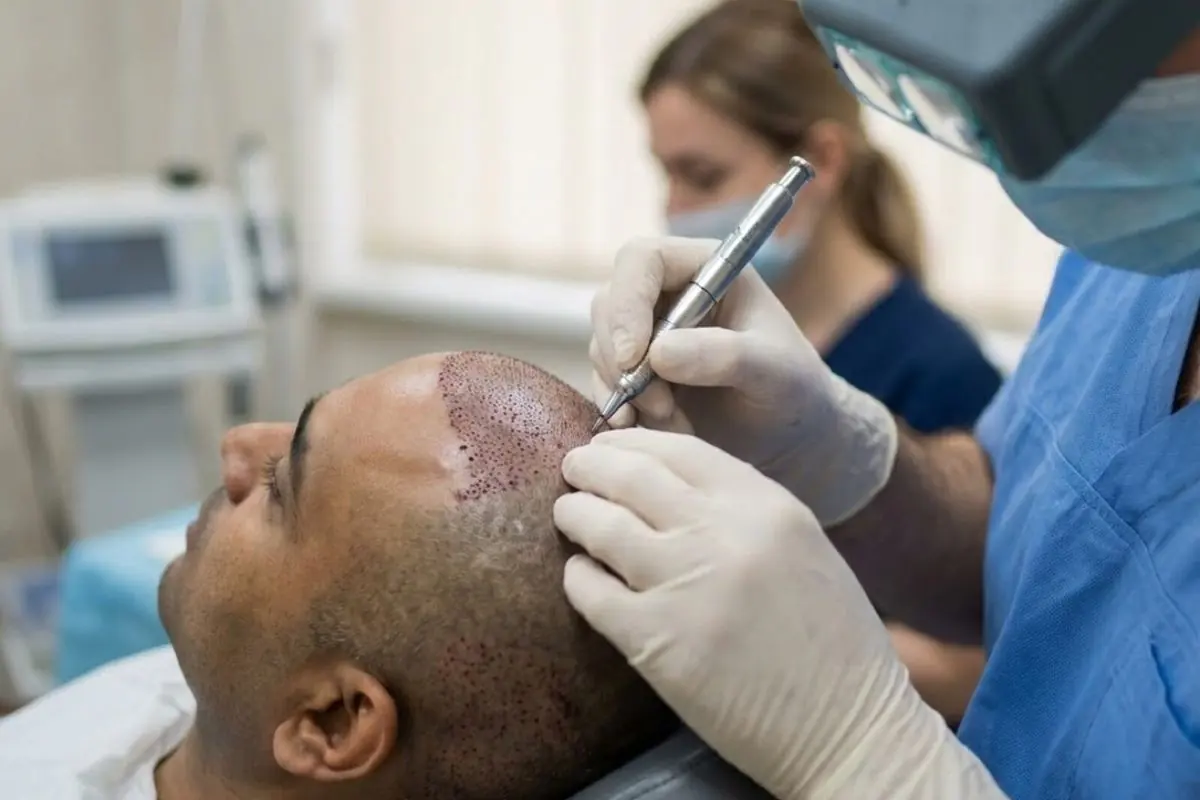
DHI uses the same one-by-one extraction as FUE, but each graft is placed with a pen-like implanter that opens the site and implants the hair in a single movement. It gives fine control over angle and depth, which suits hairline work and adding density between existing hair.

Doctor implanting grafts with a pen-style implanter during a DHI hair transplant
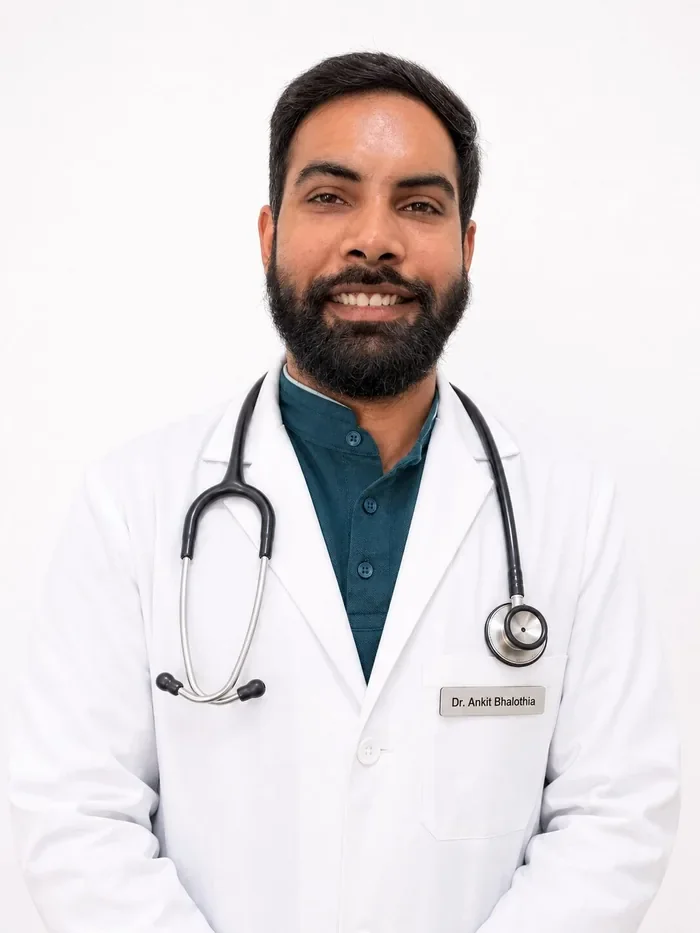
Dr. Ankit Bhalothia

Medically reviewed by Dr. Ankit Bhalothia, Aesthetic & Hair Transplant Surgeon · Last reviewed

The Technique

What Is a DHI Hair Transplant?

Direct hair implantation (DHI) is a variation of FUE. The extraction is identical: follicular units are removed one at a time from the back and sides of the scalp with a micro-punch. The difference is how the grafts go in.

Instead of making all the recipient sites first and then placing grafts with forceps, the team loads each graft into an implanter pen, often called a Choi pen. The doctor uses the pen to create the channel and deposit the graft in one "stick-and-place" motion, controlling the angle, direction and depth of every hair.

Because grafts are implanted soon after they are loaded, DHI can shorten the time they spend outside the body. The trade-off is speed: placing every graft with a pen is slower, so very large sessions are harder to finish in a single day.

In Short:

  • Same extraction as FUE: individual follicular units from your permanent donor area.
  • Pen implantation: the site is created and the graft placed in one step.
  • Fine control: useful for hairlines and for placing grafts between existing hair.
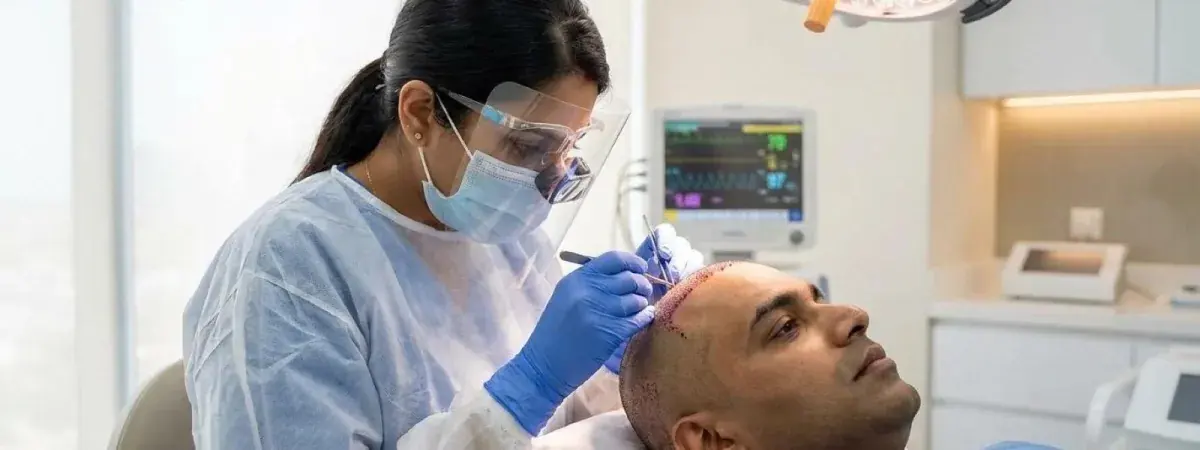
Doctor holding an implanter pen at the patient's hairline
Why DHI

Benefits of a DHI Hair Transplant

Precise Angle Control

Each graft goes in at the angle and depth set by the doctor, which helps build a soft, natural hairline.

Dense Packing

Pen implantation lets grafts sit close together in small areas that need extra density.

Works Around Existing Hair

Grafts can be placed between native hairs with less risk of disturbing them.

Less Time Outside the Body

Grafts are implanted soon after they are loaded into the pen.

Less Shaving for Small Cases

Selected small cases may need only partial shaving of the area being treated.

Same Recovery as FUE

Scabs clear in 1 to 2 weeks, and most people return to desk work in 3 to 4 days.

Suitability

Is DHI Right for You?

DHI is a choice of implantation method. Your doctor recommends it when it suits the area and the number of grafts you need.

DHI may suit you if

  • You need a hairline refined or a small area made denser
  • You still have hair in the area and want grafts placed between existing hairs
  • You would prefer less shaving and your case is small enough for that
  • Your donor area is healthy and your hair loss is stable

FUE with pre-made sites may be better if

  • You need a large area covered, such as the front and crown together
  • Your plan needs more grafts than pen implantation can comfortably place in one day
  • Your donor area is thin, or your hair loss is still changing quickly
  • Your hair loss is caused by a condition such as active alopecia areata that needs treatment first

Some plans combine both: DHI for the hairline and FUE site-making behind it. Your doctor explains the choice at your consultation.

Procedure

How DHI Is Done

A DHI session usually takes longer than FUE for the same number of grafts, because every graft is placed with a pen.

01

Planning & Hairline Design

Trichoscopy checks your donor density, the doctor estimates the grafts you need and marks the new hairline with you.

02

Numbing & Extraction

After local anaesthesia, follicular units are extracted one by one with a micro-punch, exactly as in FUE.

03

Loading the Implanters

Grafts are loaded into implanter pens sized for single, double or triple-hair follicular units.

04

Stick-and-Place Implantation

The doctor inserts each pen at the planned angle and depth and releases the graft in one motion.

05

Check & Aftercare

The area is checked, and you go home with medicines, a washing schedule and your review dates.

Recovery

DHI Recovery & Results Timeline

Recovery is essentially the same as FUE, because the extraction is the same.

D3

Days 1 to 3

Mild swelling or tightness is common. Gentle washing usually begins around day 3, as instructed.

W2

Weeks 1 to 2

Small scabs wash away and redness fades.

M1

Weeks 2 to 6

Most transplanted hairs shed while the roots stay in place. This is normal.

M4

Months 3 to 4

New hairs begin to grow, fine at first, and slowly thicken.

M12

Month 12 and after

The hairline and density mature; the final result is judged at around a year.

Medical Note: Results vary from person to person. This page is general information from Kezza Hair & Skin Clinic and is not a substitute for a consultation with a doctor.

DHI vs FUE at a glance

DHI (implanter pen)FUE (pre-made sites)
Graft extractionIndividual follicular units with a micro-punchSame as DHI
ImplantationThe pen makes the site and places the graft togetherAll sites made first, grafts placed with forceps
Often suitsHairline refinement, dense packing, gaps between existing hairLarger areas, front and crown together, big sessions
ShavingLess shaving possible in selected small casesRecipient area usually shaved
SpeedSlower per graftFaster for large graft numbers
RecoveryScabs clear in 1 to 2 weeksSame as DHI

Does DHI give better results?

There is no strong evidence that one technique consistently grows more hair than the other. Graft survival depends mostly on how carefully the grafts are handled: how quickly they are extracted, how they are stored, how gently they are placed and how experienced the team is. A skilled FUE team with good storage can match the benefit that DHI's shorter out-of-body time is meant to give.

What changes the outcome far more is the plan: a hairline that suits your face and age, a graft count your donor area can safely supply, and treatment to protect the hair you still have. That is why the technique is chosen after your examination, not before.

Combining DHI and FUE

Many hair-loss patterns need both precision at the front and coverage behind it. In a combined plan, the doctor may use DHI to shape the hairline, where angle and density matter most, and FUE site-making for the mid-scalp or crown, where larger numbers of grafts are needed. Both use the same extraction, so the donor area heals in the same way.

Can DHI be done without shaving?

For small cases, such as filling a few gaps or refining the hairline, grafts can sometimes be placed between existing hairs so that only the donor area is trimmed. Larger sessions usually need the recipient area shaved so that every graft can be placed accurately. Ask your doctor whether a partial-shave plan is realistic for your case.

Choosing where to have DHI

DHI is a surgical procedure and should be planned and performed by qualified doctors in a sterile operation theatre. The ISHRS has warned about clinics where technicians carry out the surgical steps. Before you book, ask who will design your hairline, who will extract the grafts and who will implant them. At Kezza, DHI is done in the operation theatre at our Jaipur clinic, and you can read about our doctors on the doctors page.

Further reading

Sources & Clinical References

  1. International Society of Hair Restoration Surgery (ISHRS): Implanter Pen Technologies & Placement Methodologies
  2. Shapiro Medical Group: Clinical Comparison of Direct Hair Implantation vs Pre-Made Sites
  3. ISHRS Fight the FIGHT: Patient Advocacy & Surgical Standards
  4. Journal of Cutaneous and Aesthetic Surgery: Follicular Unit Implantation Mechanics & Survival
Where

Where DHI Is Done

DHI is performed at our Jaipur clinic on Sirsi Road, Khatipura, which has our operation theatre for hair transplant surgery. If you live near Sikar or Ajmer, call +91-9284517427 and the team will tell you where your consultation and procedure can be done.

FAQs

Frequently Asked Questions

What is the difference between DHI and FUE?
Both remove grafts one by one from the donor area. In FUE, the recipient sites are made first and the grafts are placed with forceps; in DHI, an implanter pen makes the site and places the graft in one step. Read the full FUE vs DHI comparison.
Is DHI better than FUE?
Neither is better for everyone. In experienced hands, graft survival is similar. DHI suits hairlines and dense packing in small areas, while FUE is often preferred for larger sessions, and some plans use both.
Is a DHI hair transplant permanent?
The grafts come from DHT-resistant hair at the back and sides of the scalp, so they usually keep growing for life. Hair that was not transplanted can still thin, so your doctor may suggest medicine, PRP or GFC to protect it.
Does DHI need shaving?
The donor area is usually trimmed for extraction. In small cases, grafts can sometimes be placed between existing hairs with only partial shaving; larger sessions generally need the recipient area shaved.
How long does a DHI session take?
It depends on the number of grafts. Because every graft is placed with a pen, DHI takes longer than FUE for the same number of grafts, so very large cases may be split into two sessions.
Is DHI painful?
The procedure is done under local anaesthesia, so after the numbing injections most people feel only pressure. Mild soreness for a few days is common and is managed with prescribed medicines.
When will I see DHI results?
New hair usually appears around months 3 to 4 after the shedding phase, and the final result is judged at around 12 months.
Is DHI available at Kezza Sikar and Ajmer?
DHI procedures are done at our Jaipur clinic. Our Sikar and Ajmer clinics also offer hair transplant consultations; if DHI suits you, the team will explain where and when it can be scheduled.
How much does DHI cost?
It depends on the number of grafts, your donor area and what is included. DHI takes longer per graft than FUE, so it is often priced higher. See what sets the price of a hair transplant.

Planning a Hairline Restoration?

Talk to our hair transplant team in Jaipur about DHI, FUE or a combined plan, and get an honest graft assessment.

Call 9284517427 WhatsApp Us ✦ AI Scanner Book Visit