Designing natural-looking eyebrows
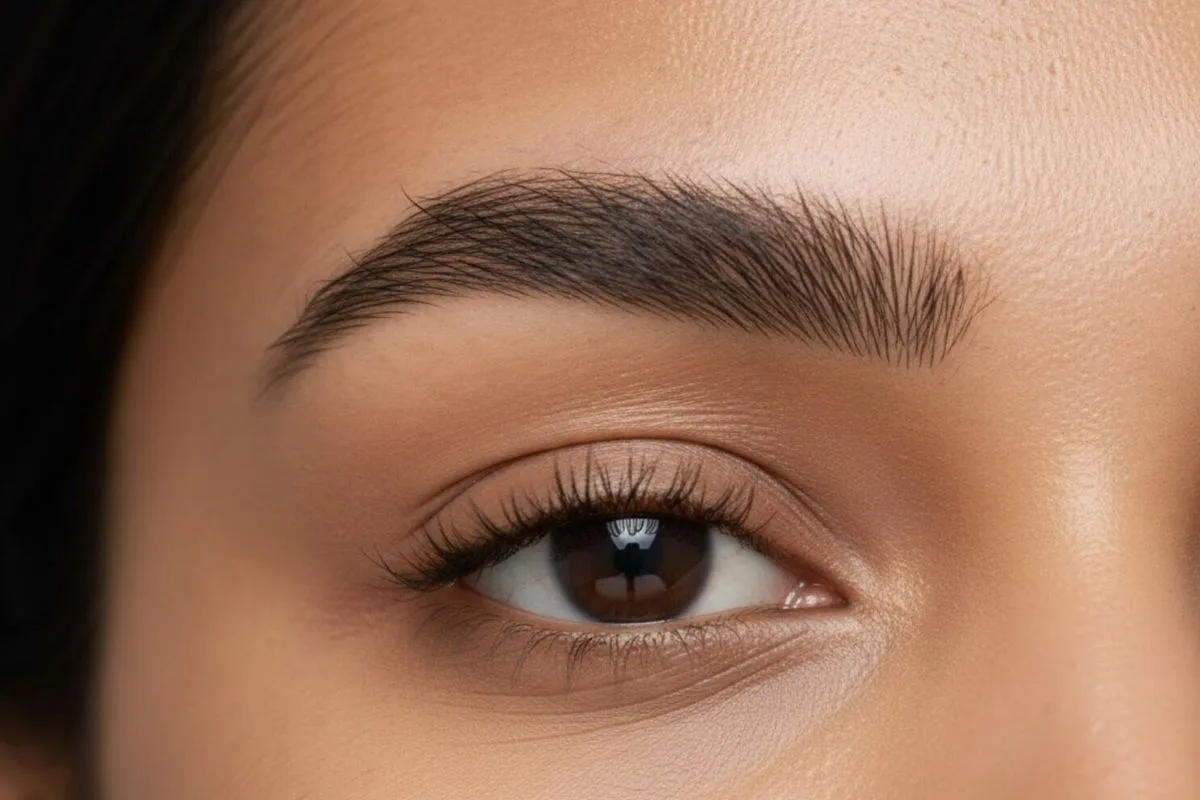
Eyebrows frame the face, so small details matter. The doctor plans three parts of the brow: the head (the inner end, where hairs point upwards), the arch, and the tail (where hairs lie flat and point towards the temple). The design is drawn on your skin and adjusted with you in the mirror until the shape, height and thickness look right for your face.
A slightly conservative design usually ages best. More density can be added in a second session if you want it, but grafts placed too low, too high or in the wrong direction are hard to correct.
Why transplanted brows need trimming
Hair taken from the scalp keeps the growth pattern of scalp hair. Natural eyebrow hair stops at a short length, but transplanted hair keeps growing, so it needs trimming every few weeks. Some people also use a little brow gel or wax to train the hairs to lie flat. Most find this quick and easy once they are used to it.
Eyebrow transplant vs microblading
| Eyebrow transplant | Microblading / eyebrow PMU | |
|---|---|---|
| What it is | Your own hair follicles implanted into the brow | Pigment placed in the skin in fine, hair-like strokes |
| Result | Real hair that grows and can be shaped | The look of fuller brows; no new hair grows |
| How long it lasts | Usually many years | About 12 to 18 months before a touch-up |
| Upkeep | Regular trimming | Periodic colour touch-ups |
| When you see the result | Gradually, over about a year | Straight away, after healing |
Some people start with microblading for an instant result and consider a transplant later for real hair, or combine the two for colour and texture.
Common causes of thin eyebrows
- Over-plucking, waxing or threading over many years, which can permanently damage follicles.
- Naturally sparse brows that have been thin since adolescence.
- Scars from injury, burns or surgery.
- Medical conditions such as alopecia areata or thyroid disease, which need to be diagnosed and treated first.
If your brows have thinned recently and you do not know why, start with a doctor's examination. A hair loss consultation helps rule out causes that need medical treatment.
Risks and aftercare
Complications are uncommon when an eyebrow transplant is done by trained doctors, and are usually limited to mild pain, swelling and crusting in the first days. Less often, some grafts may not grow, hairs may grow at an unwanted angle or small cysts may form. Keep the area clean, do not rub or scratch the brows, avoid heavy makeup and direct sun while healing, and follow your doctor's instructions.
Further reading
- Microblading vs Powder Brows: Techniques, Longevity & Results
- Hair Transplant Recovery Timeline: Healing & Graft Maturation