Key takeaways
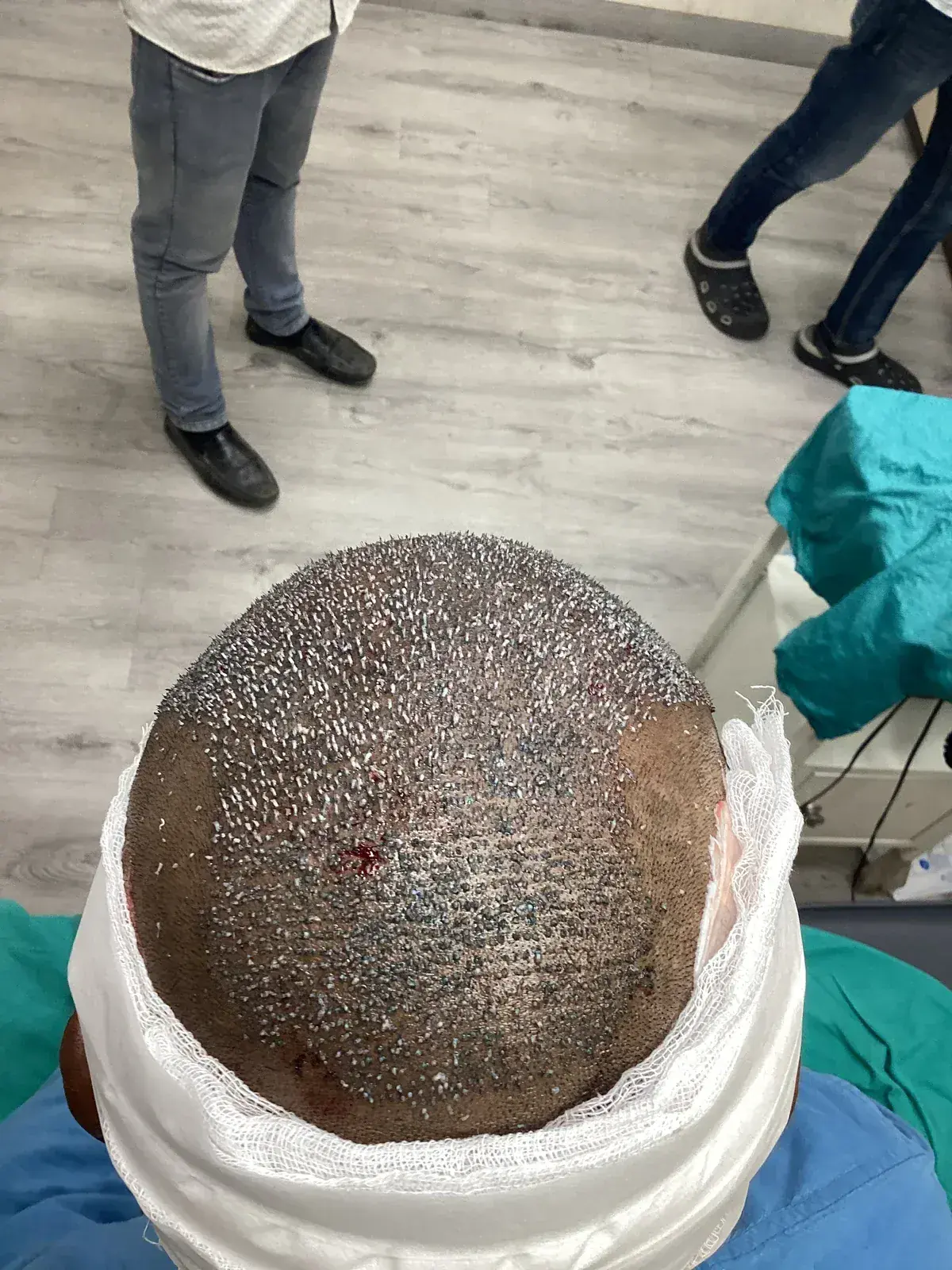
- The first 72 to 96 hours are critical: grafts are held solely by fibrin bonds and must never be rubbed, bumped, or submerged.
- Crusting and micro-scabs naturally soften and rinse away between post-operative days 8 and 12 with gentle saline and medicated foam washing.
- Between weeks 2 and 8, transplanted hair shafts shed (shock loss / telogen effluvium); this is a normal physiological reset, not graft failure.
- Active new hair growth begins between months 3 and 4, with substantial cosmetic density visible at 8 to 9 months and final maturation at 12 to 14 months.
The short answer
Hair transplant recovery is divided into two distinct phases: tissue healing (the first 10 to 14 days) and hair maturation (months 1 through 12). In the first two weeks, minor redness, scabbing and forehead swelling subside. Grafts then temporarily shed between weeks 2 and 8 before new follicular growth starts around month 3 or 4. Noticeable cosmetic coverage develops by month 6 to 8, with full caliber and natural texture achieved at 12 to 14 months.
Recovery timeline at a glance
| Timeline | What is happening clinically | Patient care instructions |
|---|---|---|
| Days 1 – 3 | Fibrin seals grafts in recipient channels; donor micro-incisions close | Sleep elevated at 45°; spray saline mist hourly; zero friction on grafts |
| Days 4 – 7 | Micro-scabs consolidate; minor forehead swelling migrates down and resolves | First gentle cup-washes with prescribed shampoo; no scratching |
| Days 8 – 14 | Grafts achieve cellular anchorage in dermis; scabs loosen | Gentle circular fingertip massage during washing to clear all crusts |
| Weeks 3 – 8 | Telogen effluvium ('shock loss'): hair shafts shed; dermal papillae rest | Normal washing resumes; light exercise permitted; be patient during shedding |
| Months 3 – 4 | Follicles transition from telogen to anagen; fine, baby hair emerges | First post-op PRP or GFC session to support vascular nourishment |
| Months 6 – 8 | Hairs thicken; color darkens; substantial visual density appears | Haircuts with scissors permitted; visible cosmetic transformation |
| Months 12 – 14 | Full shaft caliber, natural wave, and final density achieved | Final photographic review with your surgeon at the clinic |
Days 1 to 7: Immediate postoperative care and graft protection
During the initial 72 hours, follicular grafts have not yet developed new blood vessels; they survive via plasmatic imbibition (absorbing oxygen and nutrients from surrounding extracellular fluid). Any shearing force, accidental bump or rough clothing can dislodge grafts permanently.
- Sleeping position: Sleep on your back with your head elevated on two pillows or a semi-rigid travel neck pillow to prevent turning and to encourage drainage of tumescent fluids away from the eyes.
- Hydration and misting: Spraying the recipient area every 60 to 90 minutes with sterile saline keeps the graft beds moist, preventing tight crust formation and relieving itchiness.
- Medication protocol: Take prescribed oral antibiotics, anti-inflammatory medications and pain relievers exactly as instructed by your surgeon. Most patients experience mild tightness rather than acute pain.
Days 8 to 14: Crusting clearance and graft anchorage
Histological studies demonstrate that by post-operative day 9 to 10, newly sprouted capillary buds securely anchor the transplanted follicular units to the surrounding connective tissue sheath. By day 12, grafts cannot be dislodged by normal washing.
Between days 8 and 10, soft crusts must be systematically removed. Allowing thick scabs to persist past day 14 impedes oxygen diffusion and can trap sebum. Apply a diluted baby shampoo lather to the scalp for 10 minutes to soften the crusts, then gently massage them off with the pads of your fingers in circular motions under a lukewarm, gentle cup rinse.
Weeks 2 to 8: The shedding phase (Shock loss)
Many patients feel anxious between weeks 2 and 6 when the newly transplanted hairs begin to fall out on pillows or during washing. This shedding is completely normal and expected.
Because the physical act of extraction and implantation disrupts the follicular micro-environment, the follicle enters an abrupt telogen (resting) phase. The hair fiber separates, but the live follicle factory remains healthy beneath the scalp surface. Some native hairs adjacent to recipient incisions may also shed temporarily—a condition known as effluvium—which also recovers as anagen cycles resume.
Months 3 to 12: New growth and follicular maturation
Between days 90 and 120, dormant dermal papillae reactivate into the anagen (growth) phase:
- Month 3 to 4: Fine, wispy hairs begin to push through the skin. They may initially appear slightly lighter in pigment or irregular in texture. Occasional small pimples (folliculitis) can develop as emerging hair shafts pierce the stratum corneum; these are easily managed with warm compresses or topical antiseptic lotion.
- Month 6 to 8: Approximately 60% to 70% of transplanted follicles are actively producing mature hairs. Hair shafts thicken significantly, curl straightens into its natural pattern, and the hairline frames the face cleanly.
- Month 12 to 14: The final result is fully realized. Hair density reaches its peak, shaft diameter achieves maximum thickness, and scalp tissue softens to its baseline texture. Crown restorations often take closer to 14 months to fully mature due to slower vascular turnover at the vertex.
How to optimize growth during recovery
At Kezza Clinic, we recommend supporting the surgical result with proactive medical management:
- PRP & GFC therapy: Platelet-rich plasma or growth factor concentrate sessions at months 1, 3 and 6 can stimulate microvascular angiogenesis around transplanted roots. Read our comparison of PRP vs GFC to understand how they work.
- Medical maintenance: Using topical or oral finasteride and minoxidil as directed by your physician protects native non-transplanted hairs from progressive DHT-mediated miniaturization.
- Sun protection: Protect the healing scalp from intense UV exposure for the first 3 to 6 months using a loose-fitting cap to avoid post-inflammatory hyperpigmentation.
Structured follow-up reviews at Kezza
Post-operative care is included in every surgical package at Kezza Hair & Skin Clinic. We schedule in-person and digital follow-ups at 10 days, 1 month, 3 months, 6 months and 12 months at our Jaipur, Sikar and Ajmer branches to track your progress. Read more about hair transplant options or compare FUE and DHI techniques.
Considering clinical treatment?
Our aesthetic physicians and surgeons provide personalized clinical assessments at our Jaipur, Sikar and Ajmer clinics.
Sources
- International Society of Hair Restoration Surgery (ISHRS): Postoperative care and graft survival
- Dermatologic Clinics: Complications and recovery in modern follicular unit surgery
- Journal of Cutaneous and Aesthetic Surgery: Hair transplant postoperative protocols
- British Association of Dermatologists: Patient information on hair restoration surgery
This article is general health information, not a diagnosis or a substitute for a consultation. Treatment suitability, number of sessions and results vary from person to person; please speak to a doctor about your own situation.

Kezza Hair & Skin Clinic is a doctor-led hair, skin and aesthetics clinic with branches in Jaipur, Sikar and Ajmer. Meet our doctors. Related treatments: Hair transplant in Jaipur · FUE hair transplant · DHI hair transplant · PRP hair therapy · Beard Transplant · Eyebrow Transplant