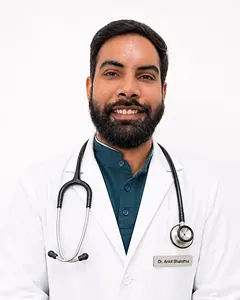
Wide or stretched scars
Often after injuries or surgery. They can be excised and closed in layers to leave a finer line.
Making old scars flatter, finer and less noticeable — ₹25,000 per session, with the number of sessions based on your scar.
Scar revision is a group of procedures that improve how a scar looks or feels: a wide or stretched scar can be cut out and closed more neatly, a tight scar can be released, and raised or pitted scars can be flattened or lifted. No treatment can erase a scar completely, but many scars can be made much less noticeable. At Kezza Clinic, Jaipur, scar revision is performed by Dr. Ankit Bhalothia, Oral & Maxillofacial Surgeon, at ₹25,000 per session.
See scar revision cost and sessions
Scar revision at Kezza is planned and performed by Dr. Ankit Bhalothia, who chooses the technique for your scar's type, size and position.
A scar is the skin's natural way of repairing a wound. Most fade with time, but some stay wide, raised, pitted, discoloured or tight, especially on the face or over joints. Scar revision means treating a scar so that it blends better with the skin around it.
The approach depends on the scar. A wide or stretched scar can be cut out and the skin closed again in layers, leaving a finer line. A scar that runs against the natural skin creases can be re-angled with a Z-plasty or W-plasty, which also releases tight scars. Depressed scars that are tethered to deeper tissue, such as some acne scars, can be released with subcision. Raised scars are often treated with steroid injections, sometimes alongside surgery.
Timing matters. Scars keep changing for 12 to 18 months, so doctors usually wait until a scar has matured before revising it, unless there is a reason to act sooner. After revision, the new scar goes through the same maturing process, which is why the final result takes months to judge.
For acne scars and uneven texture, treatments that rebuild collagen — such as microneedling — are often combined with scar revision for the best overall result.
Scar revision at Kezza costs ₹25,000 per session. Some scars need one session; others improve best with a planned series.
Price per session at Kezza Clinic as confirmed in October 2026. The number of sessions is planned after your scar has been examined.
Ask about your quoteYour doctor examines the scar before suggesting a technique.
Scars from self-injury can be treated too. You will be treated with care and without judgement; if you are struggling right now, please talk to a doctor or someone you trust first.
Dr. Ankit examines the scar, asks how it formed and how your skin usually heals, and explains which techniques could help.
You agree on the technique, the likely number of sessions and the cost before anything is done.
The area is numbed and the procedure is carried out — for example excision and fine stitching, subcision or injections.
Keep the wound clean and dry as advised. Stitches usually come out in about 5 to 7 days on the face and 10 to 14 days on the body.
Silicone gel or sheets, gentle massage when advised, and daily sunscreen help the new scar settle.
Progress is reviewed and, if planned, the next session is scheduled once the skin has healed.
Mild swelling and redness; stitches removed in about 5 to 14 days depending on the site.
The new scar is often pink and slightly firm — this is normal.
Colour and thickness improve; further sessions may be planned.
The scar becomes flatter and paler; this is when the final result is judged.
| Technique | Best for | What to expect |
|---|---|---|
| Excision and layered closure | Wide or stretched scars | A finer, neater line; stitches for about 1 to 2 weeks |
| Z-plasty or W-plasty | Scars against skin creases, tight scars | The scar is re-angled to follow natural lines and release tension |
| Subcision | Tethered, rolling acne scars | A needle releases the bands pulling the scar down; bruising for a few days |
| Steroid injections | Raised scars and keloids | Flattening over several sessions, a few weeks apart |
| Collagen-building treatments | Texture and shallow scars | Usually a course of sessions, for example microneedling |
Contact the clinic if the wound becomes increasingly red, hot, swollen or painful, discharges pus, or you develop a fever.
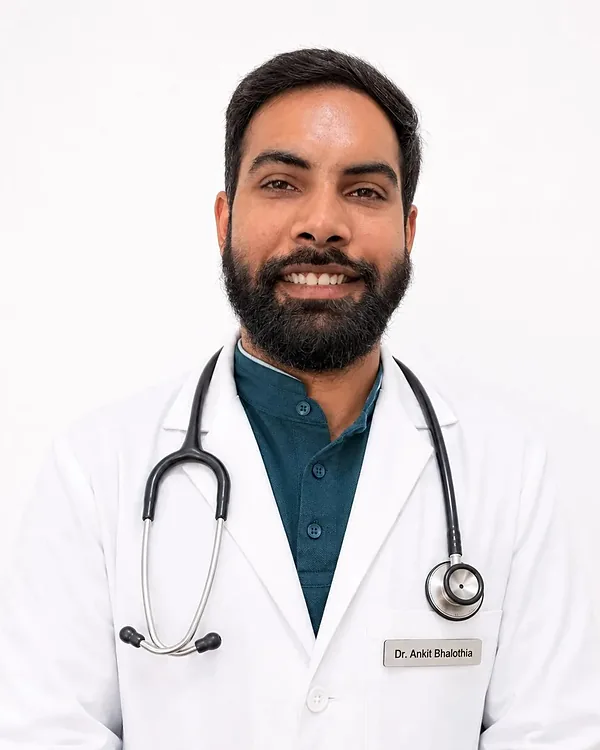
Oral & Maxillofacial Surgeon who leads hair transplant and facial aesthetic surgery at Kezza, with a focus on hairline design and natural facial proportions.
Scar revision at Kezza Clinic costs ₹25,000 per session. The number of sessions depends on the type, size and position of your scar, and is explained at your consultation with Dr. Ankit Bhalothia.
No. A scar can be made flatter, finer and less noticeable, but it cannot be erased. The aim of scar revision is a scar that blends better with the surrounding skin.
Some scars need a single session, such as a wide scar that is excised and closed. Others, such as acne scars or raised scars, improve over a planned series. Your doctor tells you what to expect after examining the scar.
Scars keep changing for 12 to 18 months, so doctors usually wait until a scar has matured before revising it. In some cases earlier treatment is suggested — your doctor will advise you.
Most scar revision is done under local anaesthesia, so you should feel pressure rather than pain during the procedure. Some soreness afterwards is normal and usually settles within days.
Yes, but keloids can come back after surgery, so they are usually treated with a combined plan — for example steroid injections, sometimes with surgery and careful aftercare. Your doctor will explain the chance of recurrence.
You can usually return to normal activities within a day or two, keeping the wound clean. Stitches come out in about 5 to 14 days. The new scar is pink at first and settles over the following months.
Tell us where your scar is, how old it is and what bothers you about it. A clear photo on WhatsApp helps the team plan your consultation with Dr. Ankit Bhalothia.
This page is general information from Kezza Hair & Skin Clinic and does not replace a consultation. Suitability, number of sessions and results differ from person to person.