
Doctor-Given Injections Jaipur • Sikar • Ajmer

Botox & Dermal Fillers in Jaipur | Anti-Wrinkle Injections & Volume

Botox and dermal fillers are the two main cosmetic injections for the face. Botox, the best-known brand of botulinum toxin, relaxes the muscles behind expression lines such as frown lines and crow's feet, while hyaluronic acid fillers restore volume in the lips, cheeks, under-eyes and smile lines. At Kezza, both are given by our doctors at our Jaipur, Sikar and Ajmer clinics, after a face assessment.

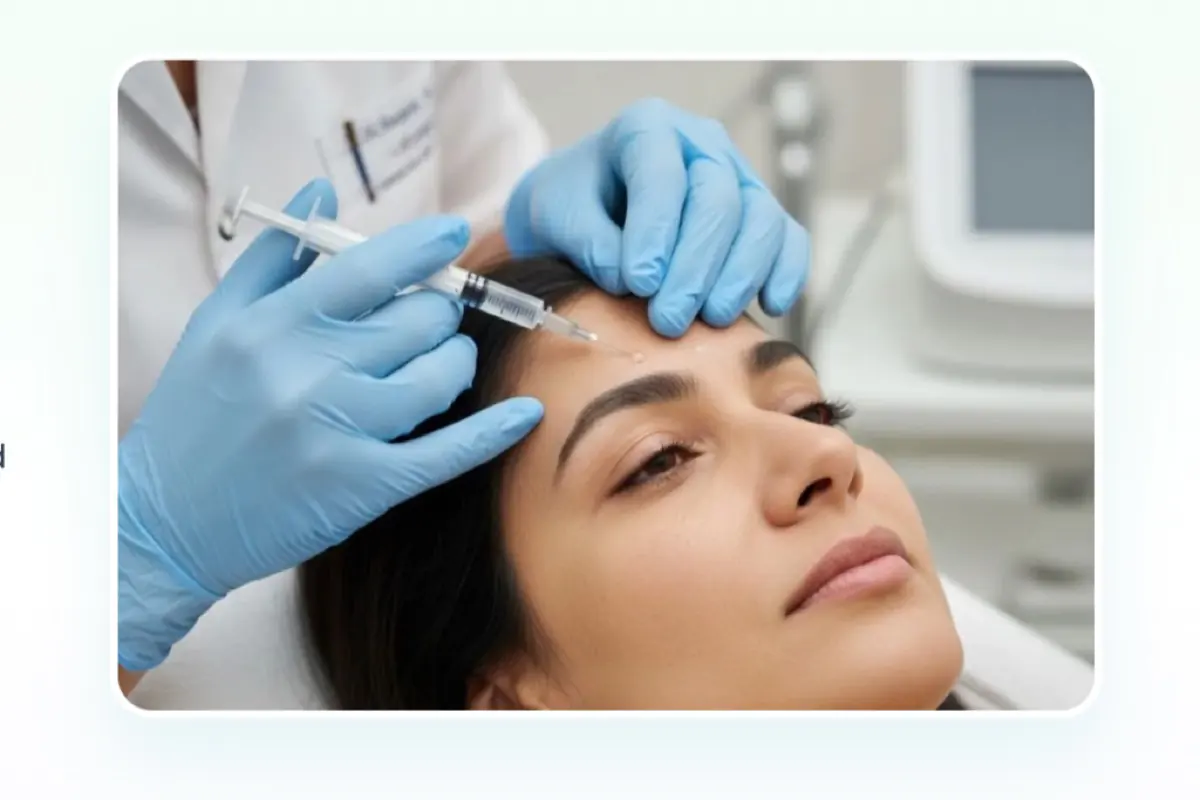
Doctor administering Botox injection on forehead at Kezza Clinic
US FDA-Approved Neuromodulators
Natural Expressions · Zero Downtime
Dr. Nakul Somani

Medically reviewed by Dr. Nakul Somani, Aesthetic & Reconstructive Plastic Surgeon (Visiting Consultant) · Last reviewed

How They Work

Botox or Fillers: What Is the Difference?

Botox and fillers treat different things. Botox is a prescription medicine that relaxes the muscles that cause lines when you move, so it suits frown lines, forehead lines and crow's feet. Fillers are gels, usually hyaluronic acid, injected under the skin to restore volume in the lips, cheeks, under-eyes and smile lines.

Expression lines form where muscles contract again and again under the skin. Botulinum toxin blocks the signal from the nerve to the muscle, so the treated muscle relaxes and the skin over it smooths out. It works best on lines that appear when you move your face, starts working within a few days and usually lasts about three to four months. Several brands of botulinum toxin type A exist, and their doses are not interchangeable, so the dose is planned for the product used and the strength of your muscles.

Dermal fillers work differently. Hyaluronic acid is a sugar found naturally in the skin; as a gel, it adds volume where it is placed and attracts water. The change is visible straight away, and the body gradually breaks the gel down, so results usually last four to twelve months, depending on the area and the product. Hyaluronic acid fillers can also be dissolved with an enzyme if needed.

Many faces benefit from one or the other, and some from both: Botox for lines in the upper face and filler for volume loss in the mid and lower face. Neither lifts loose skin or changes skin texture or pigmentation, which need other treatments.

In Short:

  • Botox: relaxes lines caused by movement.
  • Fillers: restore volume and shape.
  • Doctor-given: planned after a face assessment.
Doctor giving an injection in the cheek area
Areas

Areas Commonly Treated

Frown & Forehead Lines

Botox softens the '11' lines between the brows and lines across the forehead, keeping the brows from feeling heavy.

Crow's Feet

Lines at the outer corners of the eyes that show when you smile or squint, softened with Botox.

Jawline (Masseter)

Relaxing a strong jaw muscle with Botox can soften a square jaw; this is planned carefully by the doctor.

Lips

Hyaluronic acid filler adds subtle volume, shape or hydration to thin or uneven lips.

Cheeks & Smile Lines

Filler restores lost cheek volume and softens the folds from the nose to the mouth.

Under-Eye Hollows

Small amounts of filler can soften tear-trough hollows after the cause of dark circles is checked.

Suitability

Are Botox or Fillers Right for You?

Both suit healthy adults who want a subtle, temporary change and understand the risks.

Injections may suit you if

  • You have lines that appear when you frown, raise your brows or smile
  • Your lips, cheeks or under-eyes have lost volume, or you would like subtle definition
  • You prefer a natural result that keeps your expressions
  • You understand the effect is temporary and needs repeat treatment

They are not suitable, or need care, if

  • You are pregnant or breastfeeding
  • You have a nerve or muscle condition such as myasthenia gravis, or already have drooping eyelids or weak facial muscles
  • You have an infection, a cold sore or inflamed skin where the injections would go
  • You have a bleeding disorder or take blood thinners, or have had Botox in the last few months; tell your doctor first
  • You have had an allergic reaction to a filler, lidocaine or botulinum toxin before

Dark circles have several causes, and filler helps only some of them. See our dark circles treatment page before choosing under-eye filler.

Book a Visit

Not sure whether you need Botox, fillers or neither?

A doctor assesses your face at rest and in movement and explains which option, if any, suits your concern, with the expected result and cost.

Book on WhatsApp Book a skin consultation
Procedure

What Happens at Your Appointment

The injections take only minutes; most of the visit is the assessment and planning.

01

Face Assessment

Your doctor looks at your face at rest and in movement, checks your medical history, medicines and any previous injections, and discusses the look you want.

02

Plan & Consent

You agree on the areas, the product, the expected result, the possible side effects and the cost before anything is injected.

03

Preparation

The skin is cleaned and the points are marked. Numbing cream can be used, and many fillers contain a local anaesthetic.

04

Injections

Botox is injected in tiny amounts with a very fine needle; filler is placed in small amounts with a fine needle or a blunt cannula.

05

Aftercare & Review

You get aftercare advice, and a review at about two weeks checks the result once Botox has taken full effect and filler swelling has settled.

Timeline

Botox and Filler Timeline

Fillers show straight away; Botox builds over days. Both fade gradually.

D1

Treatment Day

Filler results are visible at once, with some swelling; small bumps from Botox settle within hours.

D3

First Few Days

Botox starts to work as the muscles relax; any filler bruising is fading.

W2

Around Two Weeks

Botox reaches its full effect and filler swelling has usually settled; your review fine-tunes the result.

M3

Three to Four Months

Botox gradually wears off and movement returns; a repeat session keeps lines soft.

M6

Six to Twelve Months

Hyaluronic acid fillers fade gradually, depending on the area and product, and can be topped up.

Medical Note: Results vary from person to person. This page is general information from Kezza Hair & Skin Clinic and is not a substitute for a consultation with a doctor.
Verified Clinical Outcome

Authentic Patient Result — Forehead & Dynamic Expression Lines

High-definition clinical outcome recorded at Kezza Clinic. Micro-calibrated neuromodulator units administered to relax hyperactive frontalis muscle bands, smoothing deep horizontal forehead creases while preserving full emotional expression and natural brow mobility.
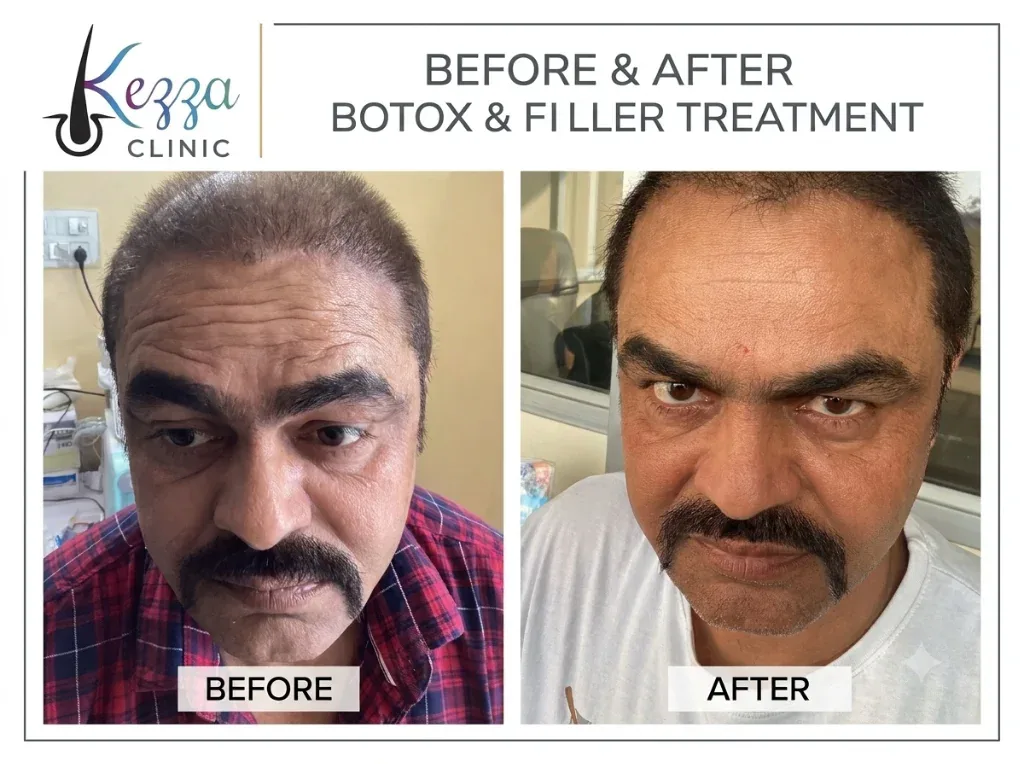
Real Kezza Patient Result • Single Session
Before & After Botox and Filler Treatment at Kezza Clinic
14-Day Post-Treatment Evaluation • Natural Expressions Preserved

Physician Treatment Protocol

Conducted by Certified Aesthetic Physician
15 min Procedure Time
3–5 days First Softening
14 days Peak Result
Zero days Social Downtime

Clinical Observations:

  • Forehead Dynamic Creases: Multi-point micro-injections relaxed the horizontal brow lines without causing a heavy brow or "frozen" mask effect.
  • Glabellar Frown Softening: Relaxed vertical frown furrows between the eyebrows, creating a refreshed, well-rested appearance.
  • Symmetric Brow Mobility: Precise dosage calibration preserves the patient's natural eyebrow arch and expressive gestures.

“Precision micro-dosing allows us to soften hyperkinetic forehead lines while strictly avoiding ptosis or eyelid heaviness. Notice how the skin texture smoothens out while the patient retains their complete, authentic personality.”

What Botox and fillers can and cannot do

Botulinum toxin is very good at softening lines caused by movement, especially frown lines, forehead lines and crow's feet. Hyaluronic acid filler is very good at restoring volume: fuller lips, softer smile lines, lifted-looking cheeks and less hollow under-eyes. Neither treatment lifts sagging skin on the jaw and neck, removes deep fixed wrinkles completely or changes skin texture and pigmentation. At your consultation, your doctor explains which of your concerns injections can help with and which need a different approach, such as pigmentation treatment or skin resurfacing.

Dermal fillers by area

  • Lips: small amounts add shape, symmetry or hydration. Results usually last about six months to a year, because the lips move a lot.
  • Cheeks and midface: filler placed over the cheekbones restores volume lost with age or weight change, which can also soften the folds below. Results often last about a year.
  • Smile lines: the folds from the nose to the corners of the mouth can be softened, often by restoring cheek volume first rather than filling the fold alone.
  • Under-eyes: the skin here is thin and the area is delicate. Filler helps hollows, not pigment or puffiness, and it can persist longer than expected, so it is used only after the cause of dark circles is clear.

Safety and choosing where to be treated

Botulinum toxin is a prescription medicine, and the dose, the product and the exact injection points all matter. Mayo Clinic lists pain, swelling or bruising at the injection site, headache and flu-like symptoms as common side effects, and droopy eyelids or uneven eyebrows as possible effects when the medicine reaches nearby muscles. For fillers, bruising, swelling, redness, tenderness and small lumps are common and usually settle within one to two weeks. Infection, persistent lumps and allergic reactions are less common.

The most serious filler risk is rare: injection into a blood vessel, which can damage the skin and, very rarely, cause vision loss or stroke. The US Food and Drug Administration advises seeking immediate medical attention for unusual pain, vision changes or skin near the injection turning white, grey or blue. These risks are lowered by treatment from a trained doctor who knows facial anatomy, products from a reliable source, and a clinic that can act quickly, including dissolving hyaluronic acid filler. Never buy filler online or have injections at a salon or a home party.

Tips for your first treatment

  • Book at least two weeks before an important event, so the full result and any review are done in time.
  • Avoid alcohol and, if your doctor agrees, medicines that increase bruising for a day or two beforehand. Do not stop prescribed medicines without asking.
  • Tell the doctor if you get cold sores, as filler around the lips can trigger them.
  • Bring photos if you have a particular look in mind, or of how you looked a few years ago.

Aftercare

You can return to most activities straight away. After Botox, avoid rubbing or pressing on the treated area for 12 hours, stay upright for three to four hours and avoid strenuous exercise for 24 hours. After filler, wait until the next day to exercise, avoid sun and heat, and do not press on or massage the area unless your doctor asks you to. A cold pack wrapped in cloth helps swelling. Contact the clinic if you notice a drooping eyelid, unevenness or swelling that lasts more than a week, fever, or any increasing pain.

Why patients choose Kezza for Botox and fillers

  • Doctor-given: every injection is planned and given by one of our doctors after a face assessment.
  • Natural results: doses and filler amounts are planned to keep your expressions and suit your features.
  • Safety first: your medical history, medicines and previous treatments are checked, and the risks are explained before you decide.
  • Three clinics: Jaipur, Sikar and Ajmer, open 9 AM to 8 PM every day, so reviews are easy to attend.
  • Clear costs: the areas, the product and the total cost are agreed before any injection.

What affects the cost of Botox and fillers?

For Botox, the cost depends on the number of areas treated, the dose each area needs and the product used. For fillers, it depends on the areas, the amount of filler needed and the product. Treating one area costs less than treating several, and your doctor explains the plan and the total before any injection.

Further reading

Sources & Clinical References

  1. Mayo Clinic: Botox Injections — Uses, Clinical Precautions & Results
  2. Cleveland Clinic: Botulinum Toxin Injections Overview & Facial Anatomy
  3. Cleveland Clinic: Comparing Facial Fillers and Neurotoxin Injections
  4. US Food and Drug Administration (FDA): Dermal Fillers (Soft Tissue Fillers) Safety
  5. American Academy of Dermatology (AAD): Dermal Fillers FAQs and Best Practices
  6. Cleveland Clinic: Lip Augmentation and Volume Restoration
  7. Cleveland Clinic: Midface Volumization with Hyaluronic Acid Fillers
  8. Cleveland Clinic: Hyaluronidase for Reversing and Dissolving Dermal Fillers
  9. DermNet: Dermal Fillers and Facial Augmentation Procedures
  10. Aesthetic Surgery Journal: Vascular Occlusion and Safety Protocols with Facial Fillers
  11. Moorfields Eye Hospital: Periorbital Injection Safety and Anatomical Considerations
Where

Botox and Fillers at Our Clinics

Kezza Jaipur

A-7, 1st Floor, Hanuman Nagar, Sirsi Road, Khatipura, Jaipur, Rajasthan 302012

9 AM – 8 PM, all 7 days

+91-9284517427

Get directions

Kezza Sikar

4th Floor, Shakambhari Heights, Opposite S.K. Hospital, Silver Jubilee Road, Sakpura Mohlla, Samrathpura, Sikar, Rajasthan 332001

9 AM – 8 PM, all 7 days

+91-9284517427

Get directions

Kezza Ajmer

1st Floor, Hotel Oasis Complex, Shastri Nagar, Jawahar Nagar, Ajmer, Rajasthan 305001

9 AM – 8 PM, all 7 days

+91-9216088257

Get directions

Botox and dermal fillers are available at our Jaipur, Sikar and Ajmer clinics, open 9 AM to 8 PM, all 7 days. Injections are given by our doctors. Call or WhatsApp to book a consultation.

FAQs

Frequently Asked Questions

How long does Botox last?
For most people the effect lasts about three to four months, according to Mayo Clinic, and some find it lasts a little longer. Movement returns gradually, and the lines slowly return to how they looked before treatment.
When will I see the results of Botox?
Mayo Clinic notes that the injections usually begin working one to three days after treatment, and the full result can take a week or more. Cleveland Clinic says full results are visible within 10 to 14 days, which is why reviews are booked at about two weeks.
Will I look frozen?
Not when the dose is planned for your face. The aim is to soften lines while keeping natural expressions. If you prefer a lighter effect, your doctor can start with a lower dose and review it at two weeks.
What are the side effects of Botox?
Common side effects are mild pain, swelling or bruising at the injection sites, and sometimes a headache or flu-like feeling. Less often, the medicine reaches nearby muscles and causes a drooping eyelid or uneven eyebrows, which is temporary. Rarely, the effect spreads further; seek urgent care for muscle weakness, any difficulty breathing, swallowing or speaking, or vision problems.
How long do lip fillers last?
Hyaluronic acid lip filler usually lasts about six months to a year, which is shorter than in less mobile areas such as the cheeks, where results often last about a year. How long it lasts also depends on the product and on your body.
Can dermal fillers be reversed?
Hyaluronic acid fillers can be dissolved with an enzyme called hyaluronidase, which is also used urgently if filler blocks a blood vessel. The full effect can take up to two weeks, and allergic reactions to the enzyme are rare. Non-hyaluronic acid fillers cannot be dissolved this way.
Can fillers cause blindness?
Very rarely. If filler is accidentally injected into a blood vessel, it can block blood flow and cause skin damage, vision loss or stroke. A 2024 review found the nose, forehead and the area between the brows to be the highest-risk sites. Careful technique and knowledge of facial anatomy lower the risk, and urgent care is needed for unusual pain, vision changes or white, grey or blue skin near the injection.
Do I need Botox or fillers?
It depends on what bothers you. Lines that appear when you move, such as frown lines and crow's feet, usually respond to Botox. Hollows, thin lips and folds that are visible at rest usually need filler. Your doctor will explain which, if either, suits your face.
What should I avoid after Botox or fillers?
After Botox, Cleveland Clinic advises not rubbing the area for 12 hours, staying upright for three to four hours and avoiding strenuous exercise for 24 hours. After filler, the American Academy of Dermatology suggests waiting until the next day to exercise, staying out of the sun and not touching the treated area for three days.

Book a Botox or Filler Consultation

Visit our Jaipur, Sikar or Ajmer clinic for a face assessment and a plan that keeps your natural expressions.

Call 9284517427 WhatsApp Us ✦ AI Scanner Book Visit