Key takeaways
- A hair transplant is planned around the patient’s hair-loss pattern, donor supply and recipient needs before the procedure begins.
- The main stages are preparation and marking, donor harvesting, graft handling, recipient-site preparation and graft placement.
- FUE removes individual follicular units; the implantation method can vary depending on the surgical plan.
- After surgery, the clinic provides wound-care and graft-protection instructions, with follow-up based on the individual case.
The short answer
A hair transplant is a planned surgical procedure rather than a single step. The team first confirms the diagnosis and treatment plan, marks the recipient area, prepares the donor area, harvests follicular units, handles the grafts and places them according to the planned design. The exact sequence and tools can differ between FUE and DHI cases.
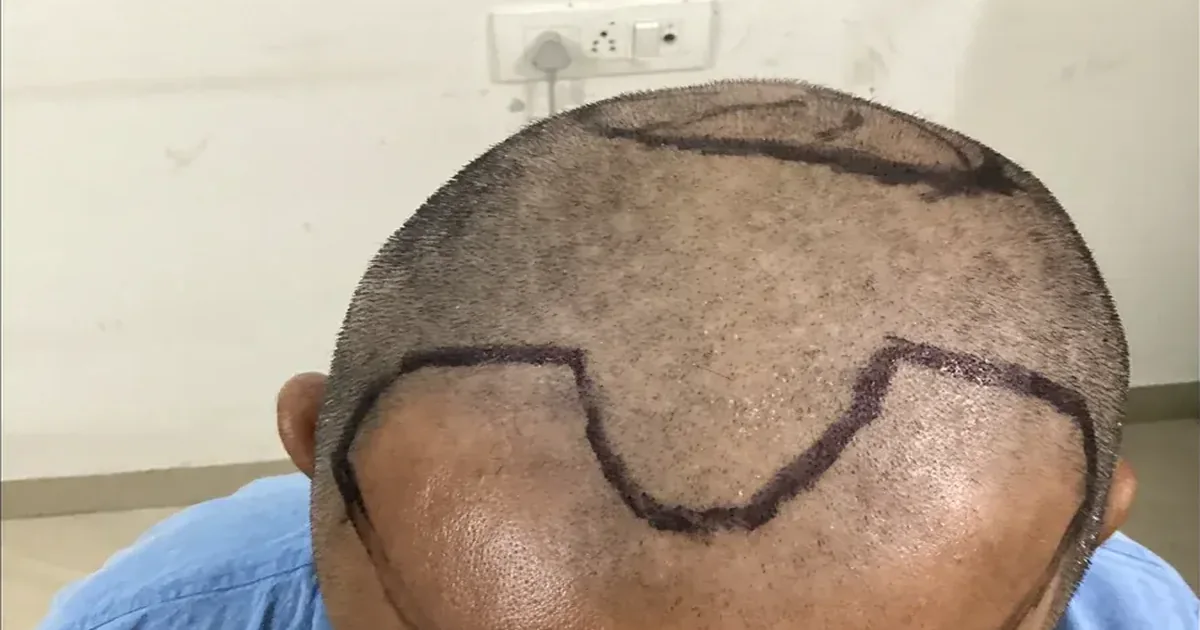
1. Planning and hairline marking
Before the procedure, the doctor reviews the hair-loss pattern, donor area and recipient area. Hairline design is discussed before marking because the number of grafts available is finite. The plan should account for existing hair and the possibility that untreated native hair loss may continue.
Read our detailed guide to hair transplant hairline design for more on this stage.
2. Preparing the donor area
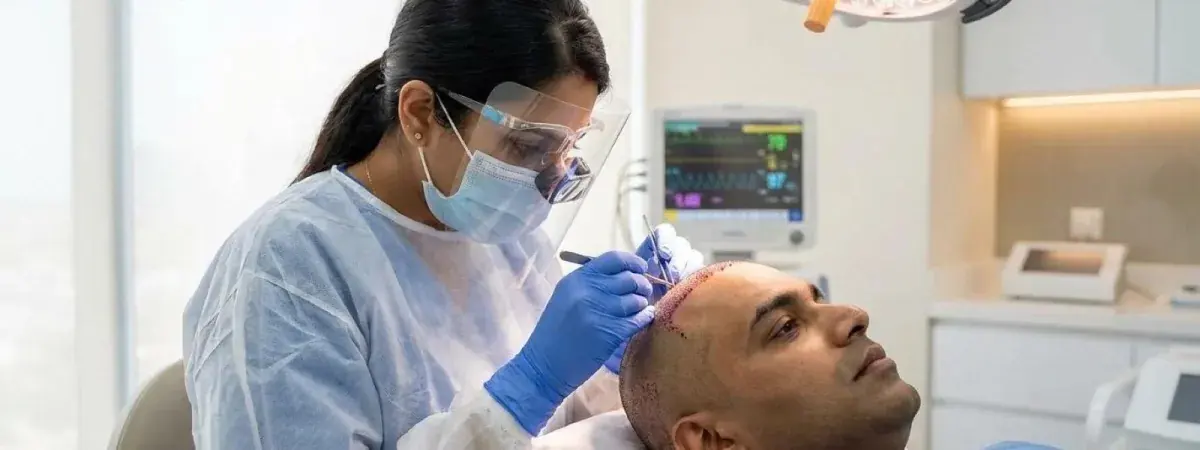
For FUE, the donor area is usually trimmed as needed so the follicular units can be visualized and harvested. Local anaesthesia is used to numb the treatment area. The ISHRS describes FUE as removal of individual follicular units from the donor area rather than removing a strip of scalp.
3. Graft harvesting
Individual follicular units are extracted with a small punch. The goal is to remove useful grafts while preserving the surrounding donor area. Graft characteristics vary: some units contain one hair and others contain multiple hairs.
4. Preparing the recipient area
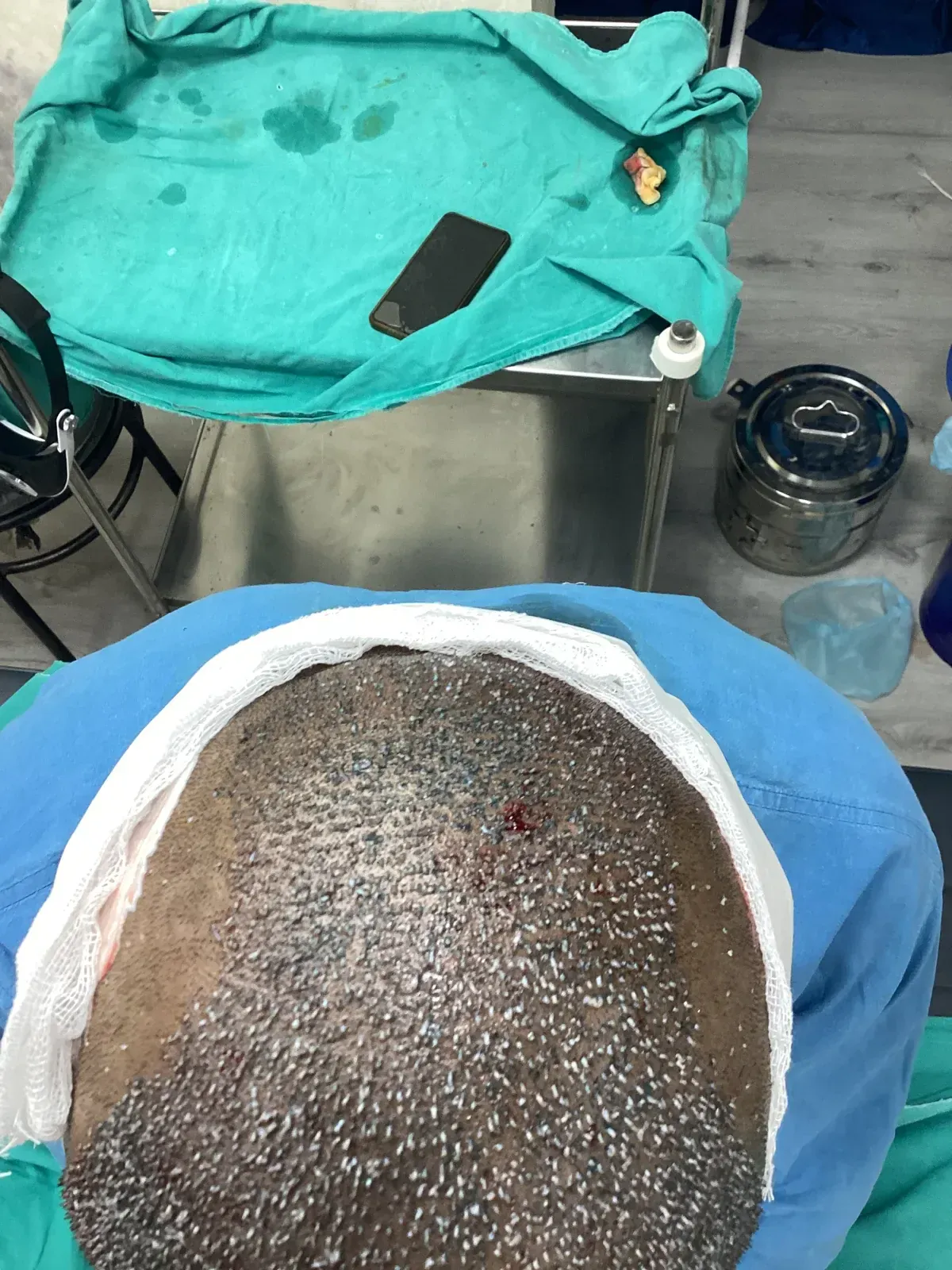
The surgeon prepares the recipient area according to the agreed design. Recipient sites are planned for direction, angle, spacing and distribution. The method used to create the recipient sites depends on the surgical approach.
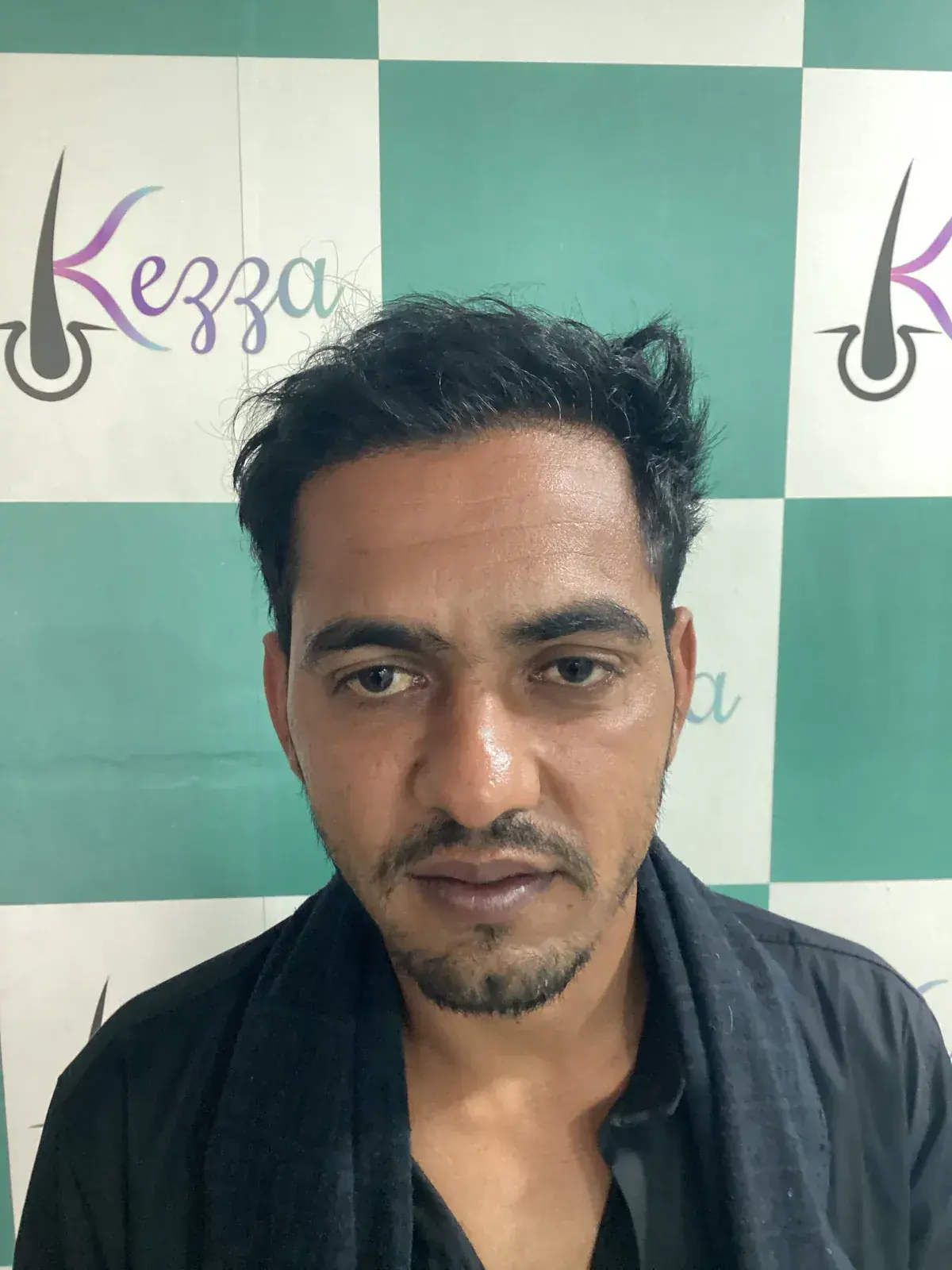
Real Kezza treatment-stage photographs
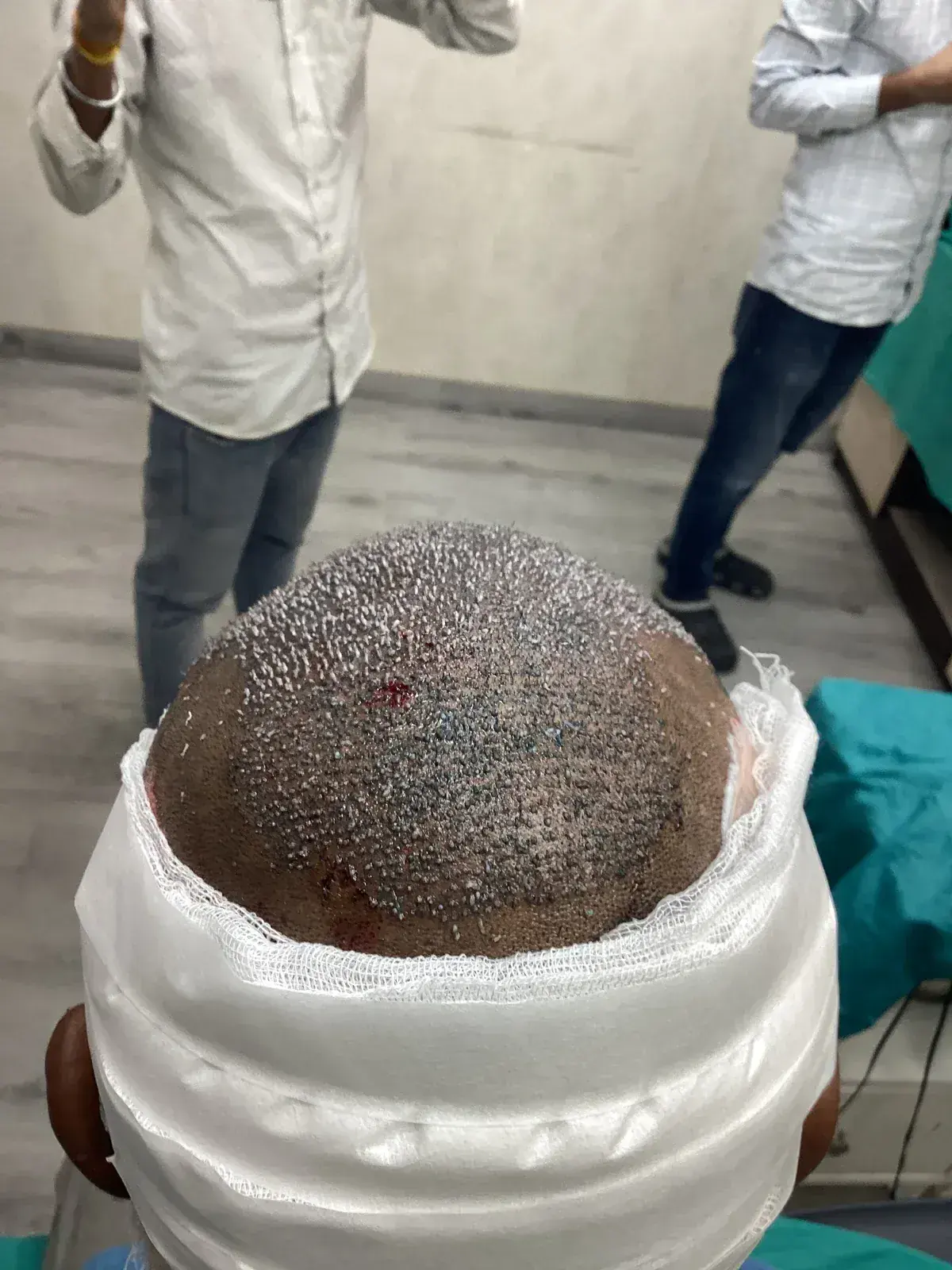
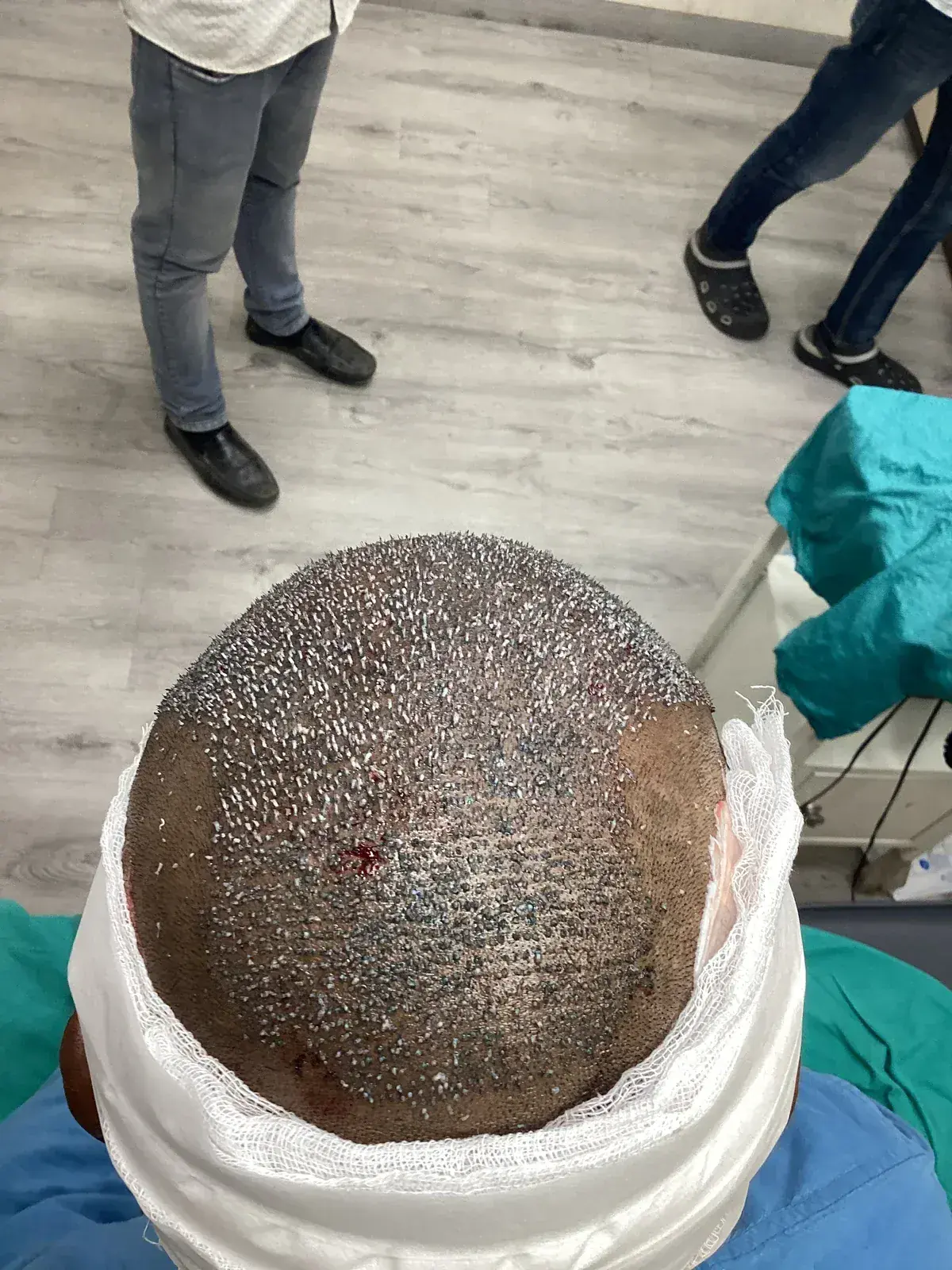
5. Graft placement
After preparation, the follicular units are placed into the recipient area. In conventional FUE workflows, recipient sites may be created before graft placement and grafts placed with forceps. In DHI, an implanter pen may be used to create the site and place the graft in a single movement. The chosen approach depends on the case and surgical plan.
6. The first days after surgery
Once placement is complete, the scalp is checked and the patient receives instructions for protecting the grafts and caring for the donor and recipient areas. Swelling, redness, crusting and temporary shedding can occur. Follow the clinic’s instructions rather than comparing your healing with another patient’s photographs.
The hair transplant recovery timeline explains the later stages in more detail.
7. Understanding the growth timeline
Transplanted hairs do not become dense immediately. The AAD notes that transplanted hairs can shed in the first weeks after surgery and that visible results generally develop over several months. The final timeline varies by patient, graft characteristics and other factors.
Questions to ask before surgery
- Who will examine and diagnose the cause of my hair loss?
- Who will perform the surgical parts of the procedure?
- How many grafts are planned and why?
- How will my donor area be protected?
- What aftercare and follow-up will I receive?
The bottom line
Understanding each stage makes it easier to compare clinics and ask useful questions. The technique name matters, but so do diagnosis, surgical planning, donor management, graft handling and postoperative care.
Considering clinical treatment?
Our aesthetic physicians and surgeons provide personalized clinical assessments at our Jaipur, Sikar and Ajmer clinics.
Sources
- American Academy of Dermatology: Hair transplant process and recovery
- ISHRS: FUE Hair Transplant — procedure and recipient-site preparation
- ISHRS Consumer Advocacy: Questions to ask about hair restoration surgery
This article is general health information, not a diagnosis or a substitute for a consultation. Treatment suitability, number of sessions and results vary from person to person; please speak to a doctor about your own situation.

Kezza Hair & Skin Clinic is a doctor-led hair, skin and aesthetics clinic with branches in Jaipur, Sikar and Ajmer. Meet our doctors. Related treatments: Hair transplant at Kezza · FUE hair transplant · DHI hair transplant