Key takeaways
- The cost of a hair transplant mainly follows the number of grafts you need, which depends on the area to cover, your hair-loss stage and the density you want.
- The technique (FUE, DHI or FUT), your donor area and whether you need one or two sessions also change the estimate.
- A much lower quote can mean fewer grafts, technician-led surgery or missing aftercare, so always ask what is included.
- Kezza gives a written estimate only after examining your scalp, and EMI plans are available on most procedures.
The short answer
There is no single price for a hair transplant, because no two cases need the same amount of work. The biggest factor is the number of grafts needed to cover your thinning area at a natural density. After that come the technique, the quality of your donor area, whether the work fits in one session, who performs the surgery and what aftercare is included. A trustworthy estimate needs a scalp examination first, which is why Kezza gives a written estimate only after your consultation.
1. How many grafts you need
A graft is a follicular unit: a natural group of one to four hairs. Most clinics in India price by the graft or by a package built on a graft count, so the size of the area you want covered drives the cost more than anything else. The number rises with the stage of hair loss and the density you are aiming for.
Surgeons use rough ranges like these as a starting point for men with pattern hair loss:
| Norwood stage | What is usually treated | Approximate grafts |
|---|---|---|
| Stage 2 | Temple corners; surgery is rarely recommended yet | 0 to 1,500 |
| Stage 3 | Hairline and temples | About 1,500 to 2,500 |
| Stage 4 | Front, mid-scalp and early crown | About 2,500 to 3,500 |
| Stage 5 | Front to crown; often planned in two sessions | About 3,500 to 4,500+ |
| Stages 6 and 7 | Large areas where donor supply sets the limit | About 4,000 to 6,000+ |
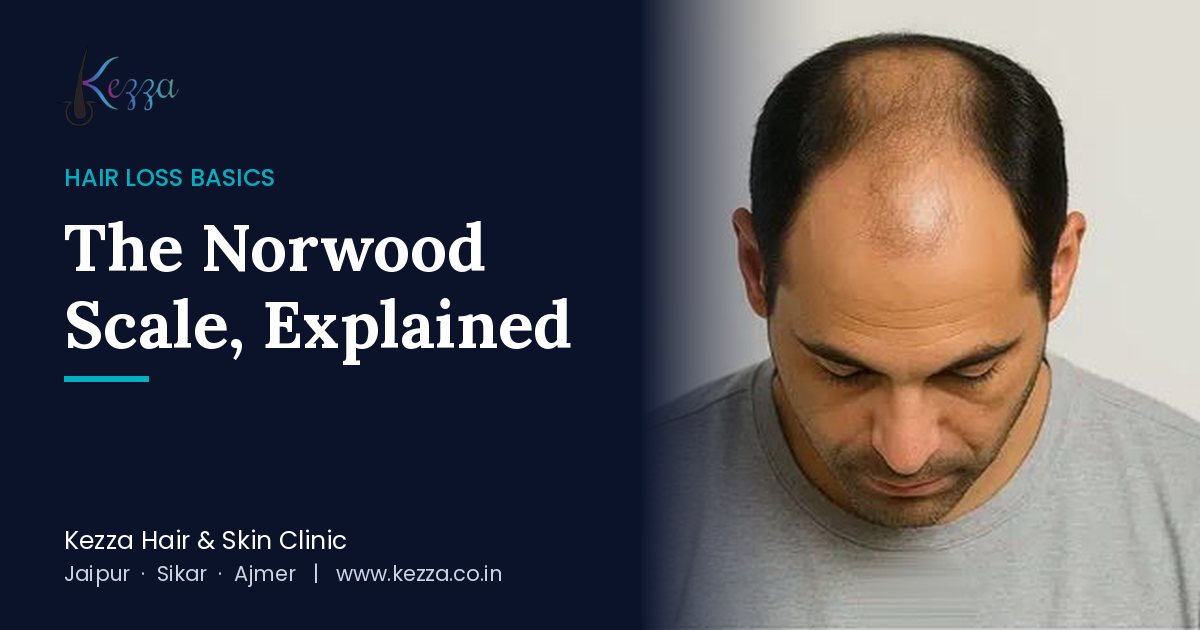
These are approximations. Your actual number depends on donor density, hair thickness, curl, scalp size and the look you want. Not sure of your stage? See our guide to the Norwood scale.
2. Technique: FUE, DHI or FUT
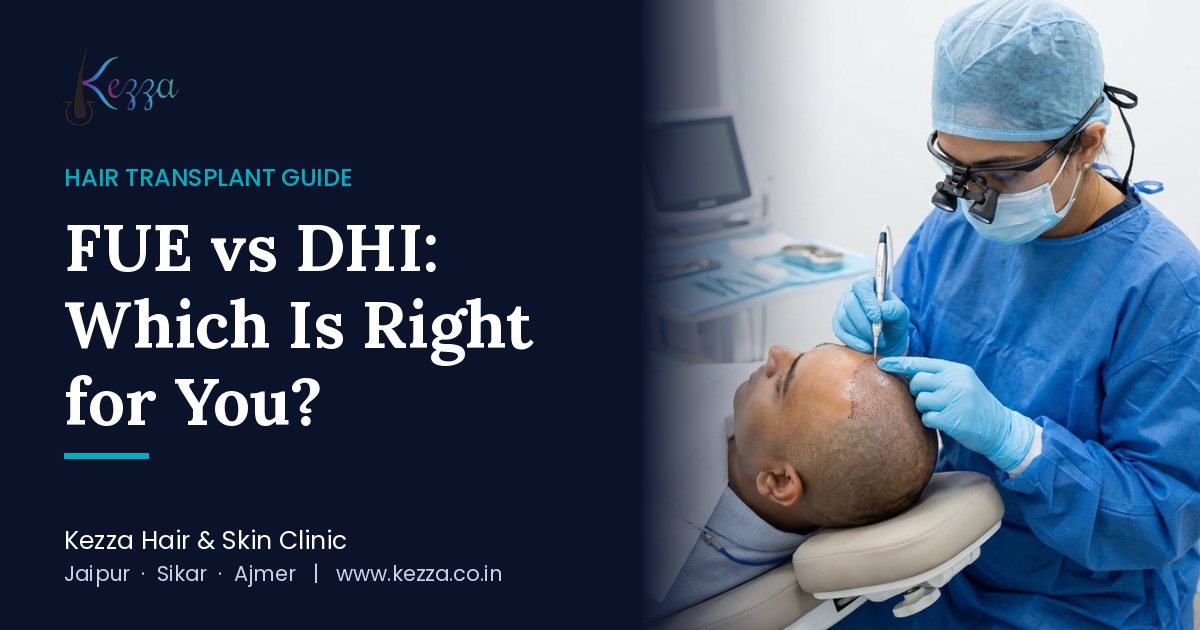
All three move your own follicles, but they use different amounts of surgical time. DHI implants every graft with a pen-like implanter, which is slower per graft and needs more team time, so many clinics price it higher than standard FUE. FUE with pre-made recipient sites is usually more efficient for large sessions. FUT (strip surgery) harvests grafts differently and leaves a fine linear scar. Read FUE vs DHI: which is right for you? for the differences.
3. Your donor area and hair characteristics
A dense donor area with thick hair gives more coverage per graft, so fewer grafts may achieve the look you want. Fine hair, low donor density or a high contrast between hair and skin colour can mean more grafts for the same visual result. In some cases, beard or body hair can add donor supply, which changes the plan and the cost.
4. One session or two
Large cases are often safer and more natural when split into two sessions several months apart. That spreads the cost, but the total may be higher than a single-session quote that promises the same coverage in one day. Be cautious of any quote that offers very large graft numbers in one sitting without checking whether your donor area can support it.
5. Who performs the surgery, and where
Hair transplantation is surgery. The ISHRS has warned about "black-market" clinics where unqualified technicians do the operation, and lists outcomes such as scarring, unnatural hairlines, poor growth, depleted donor areas and patients receiving far fewer grafts than they paid for. Doctor-led surgery in a sterile operation theatre costs more to run, and that is part of what you are paying for.
6. What is included
When you compare quotes, check whether each one includes:
- the consultation and trichoscopy (scalp examination under magnification);
- local anaesthesia, medicines and an aftercare kit;
- follow-up reviews (Kezza reviews patients at 10 days, 1, 3, 6 and 12 months);
- any PRP or GFC sessions recommended alongside the transplant;
- medical therapy to protect your existing hair, which many doctors advise because native hair can keep thinning.
Red flags when comparing quotes
- A final price given on the phone or WhatsApp without anyone examining your scalp.
- "Unlimited grafts" or a graft count far above what your donor area could safely supply.
- No named doctor, or no answer when you ask who will perform each step.
- Pressure to book today to keep a discount.
- No written plan listing the graft count, technique and what is included.
- No follow-up after surgery.
How Kezza prepares your estimate
- Consultation: the doctor discusses your concerns, history and goals.
- Scalp assessment: trichoscopy to grade your hair loss, check donor density and rule out other causes of hair fall.
- Graft plan: the area to treat, the technique and whether one or two sessions are sensible.
- Written estimate: you receive it before you commit. EMI plans are available on most procedures.
You can start with our free AI skin and scalp scanner for a preliminary check, then book a consultation at our Jaipur, Sikar or Ajmer clinic. Learn more about hair transplant at Kezza.
Sources
- ISHRS: FUE hair transplant, process and recovery
- Charles Medical Group: Norwood scale and graft estimates by stage
- ISHRS Fight the FIGHT: Beware of illegal hair transplants
- American Academy of Dermatology: Hair loss diagnosis and treatment
This article is general health information, not a diagnosis or a substitute for a consultation. Treatment suitability, number of sessions and results vary from person to person; please speak to a doctor about your own situation.

Kezza Hair & Skin Clinic is a doctor-led hair, skin and aesthetics clinic with branches in Jaipur, Sikar and Ajmer. Meet our doctors. Related treatments: Hair transplant in Jaipur · Book a consultation