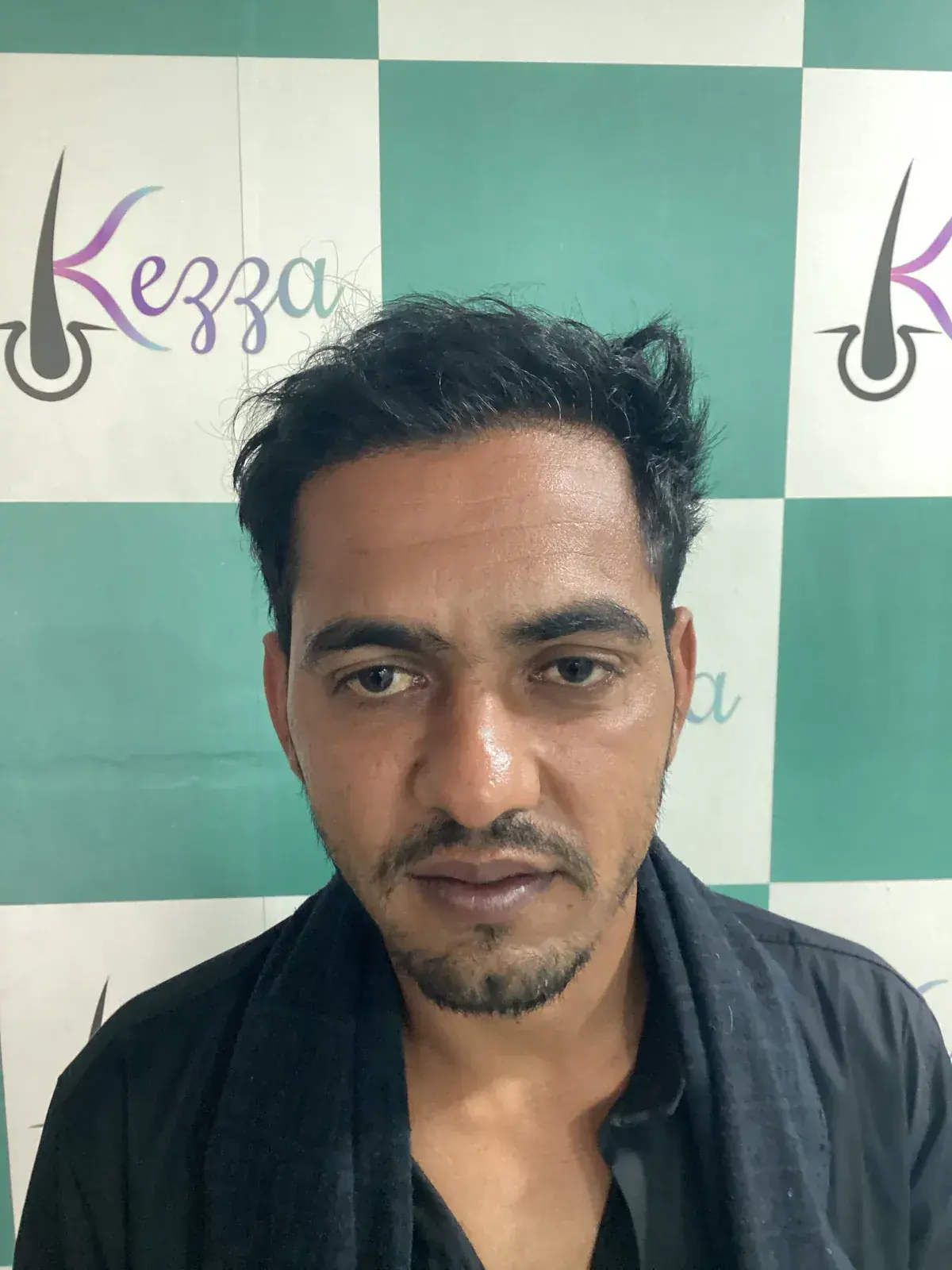
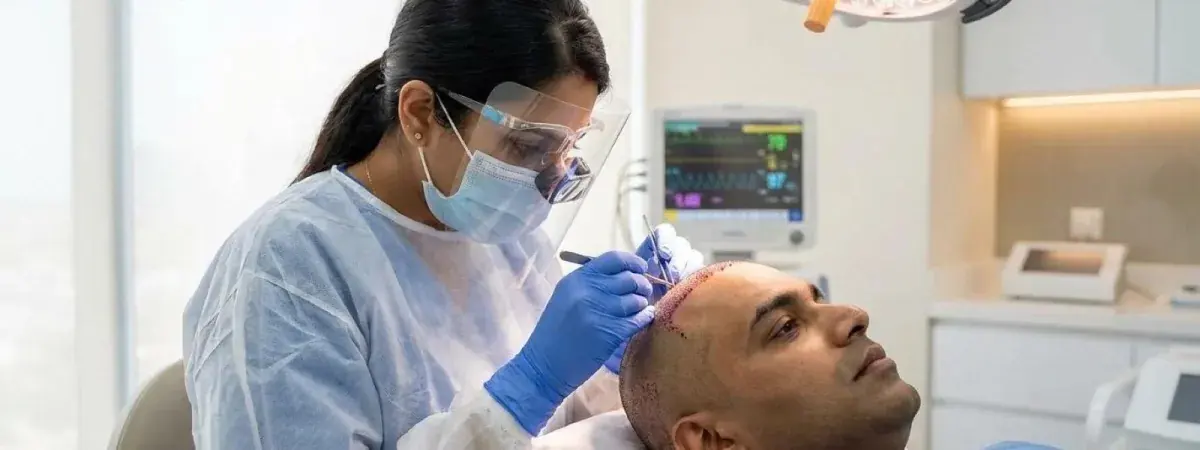
Key takeaways
- Hairline design is individualized; the goal is to create a pattern that fits the patient rather than using one fixed template.
- Doctors consider age, existing hair, facial proportions, donor supply, hair characteristics and the likely progression of future hair loss.
- The frontal transition zone usually needs careful placement and angulation so transplanted follicles blend with native hair.
- A consultation and scalp assessment are needed before estimating graft numbers or recommending FUE, DHI or another approach.
The short answer
Hairline design is one of the most important planning steps in a hair transplant. The doctor has to balance the current pattern of hair loss with the patient’s age, facial proportions, existing hair, donor supply and the possibility of future thinning. A design that looks appropriate today also needs to leave enough donor capacity for later needs.
What doctors assess before drawing the hairline
A consultation starts with an examination of the scalp and the pattern of hair loss. The doctor may assess donor density, hair calibre, follicular-unit characteristics and the condition of the recipient area. Existing hair matters because transplanted grafts need to blend with native hair, and ongoing hair loss can change the appearance of the result over time.
- Age and progression: younger patients may have a hair-loss pattern that is still evolving, so long-term planning is important.
- Facial proportions: the frontal hairline should relate to the patient’s forehead and overall face rather than being copied from another person.
- Donor supply: the amount and quality of donor hair limits how much coverage can be created safely.
- Hair characteristics: thickness, curl and contrast with the scalp influence the visual density achieved by a given number of grafts.
Why the transition zone matters
The first part of a frontal hairline needs to blend gradually into denser hair behind it. Recipient sites are planned with attention to direction, angle and spacing. The ISHRS describes hairline and recipient-area planning as a core part of hair restoration surgery, alongside graft harvesting, site creation and postoperative care.
The objective is not simply to put as many grafts as possible at the very front. A surgeon must consider how the transition will look at different hair lengths and how the hairline may age as native hair changes.
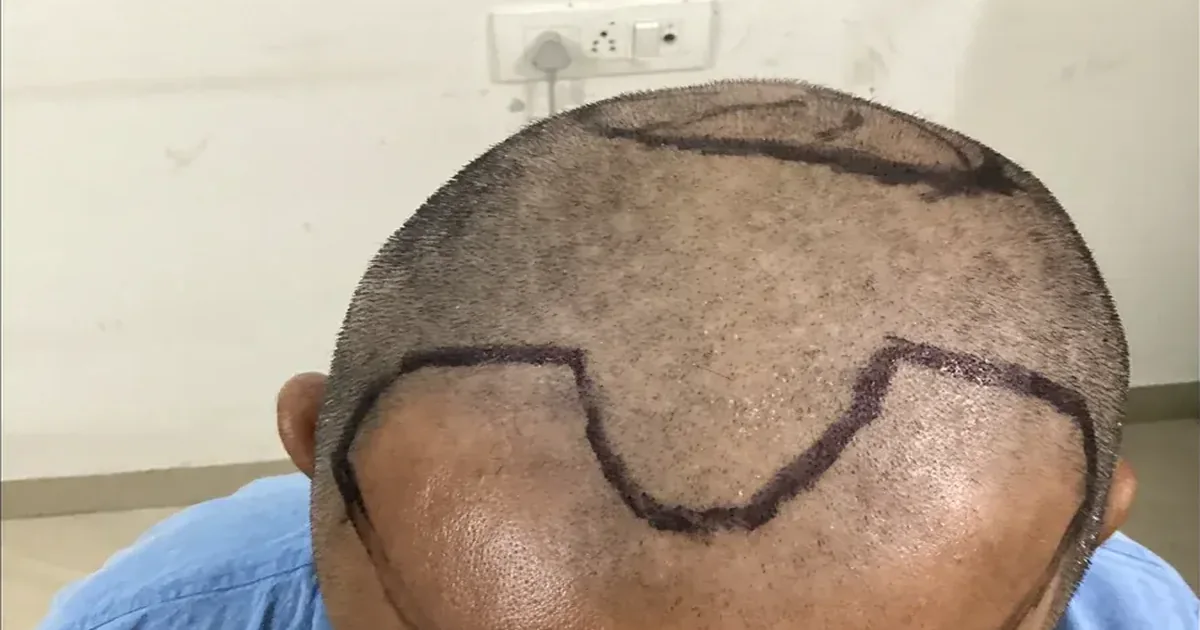
What this real Kezza photograph shows
Does hairline design change between FUE and DHI?
The design itself is not determined by the technique name. FUE and DHI describe different approaches to graft implantation, while the recipient-area plan still depends on the patient’s anatomy and goals. In some cases, an implanter-based approach may be useful for selected placement between existing hairs, while conventional recipient-site creation can be efficient for larger areas.
That is why it is more useful to ask how the doctor plans the hairline and donor use than to choose a technique based only on a label.
How hairline design affects graft planning
Moving a hairline forward increases the surface area that needs coverage. The doctor therefore has to balance the desired position with the available donor supply. A consultation may also consider whether the crown or mid-scalp will need attention later. A staged plan can be more appropriate than using a large number of grafts in one session.
Our guide on how many grafts a hair transplant may require explains why graft estimates vary, while FUE vs DHI explains how implantation methods differ.
Questions to ask at consultation
- What hair-loss pattern do you expect over the next several years?
- How much donor hair is available?
- Why is this hairline position appropriate for my age and facial proportions?
- How many grafts are being allocated to the frontal area?
- What happens if native hair continues to thin?
The bottom line
A hair transplant hairline should be planned around the individual, not around a fixed template or a marketing promise. A proper consultation should explain the design, donor limitations, expected progression and the technique proposed before surgery.
Considering clinical treatment?
Our aesthetic physicians and surgeons provide personalized clinical assessments at our Jaipur, Sikar and Ajmer clinics.
Sources
- American Academy of Dermatology: A hair transplant can give natural-looking results
- ISHRS: Hairline design and recipient area education
- ISHRS: FUE Hair Transplant — preparing recipient sites
This article is general health information, not a diagnosis or a substitute for a consultation. Treatment suitability, number of sessions and results vary from person to person; please speak to a doctor about your own situation.

Kezza Hair & Skin Clinic is a doctor-led hair, skin and aesthetics clinic with branches in Jaipur, Sikar and Ajmer. Meet our doctors. Related treatments: Hair transplant at Kezza · FUE hair transplant · DHI hair transplant · Beard Transplant