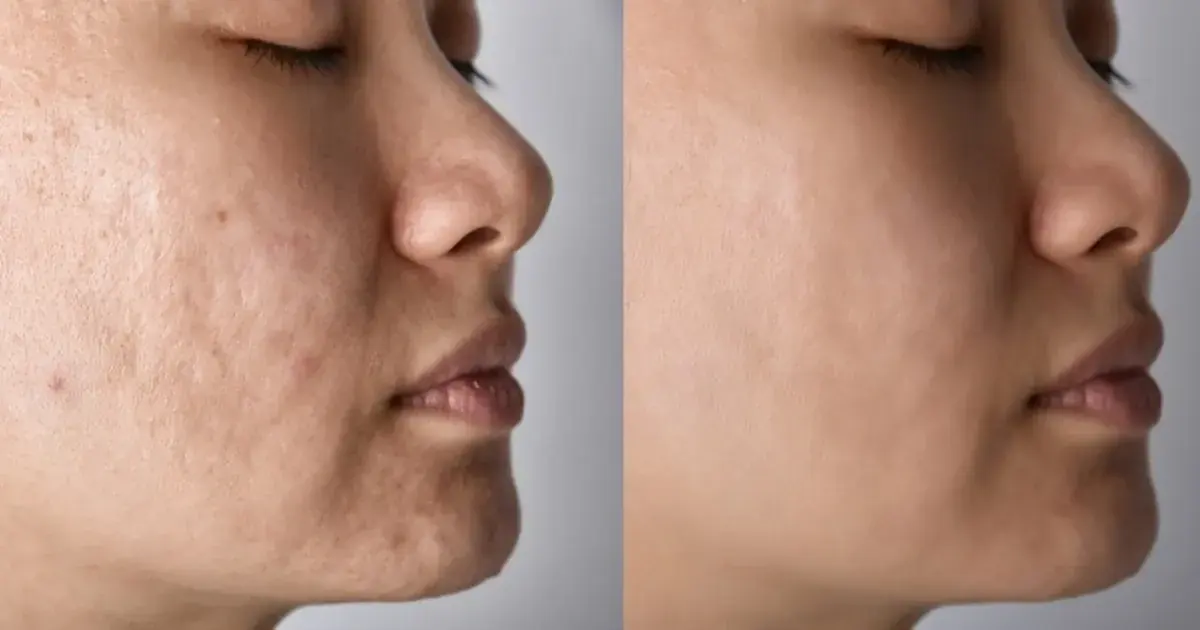
Key takeaways
- Atrophic acne scars fall into three primary categories: ice-pick, boxcar and rolling scars, each requiring a specific depth of intervention.
- No single treatment corrects all scar types; dermatologists combine subcision, MNRF, fractional lasers and TCA CROSS for multimodal efficacy.
- Microneedling Radiofrequency (MNRF) delivers heat to deep reticular dermis with minimal epidermal disruption, offering safer remodeling in darker Fitzpatrick skin tones.
- Clinical treatments aim for progressive improvement—typically 50% to 75% depth reduction over multiple sessions—rather than overnight erasure.
The short answer
Effective acne scar treatment requires matching the procedure to the specific anatomical scar type. Narrow ice-pick scars respond best to focal TCA CROSS peels; shallow boxcar scars improve with fractional resurfacing and MNRF; and undulating rolling scars require subcision to sever subcutaneous tethering bands. Most patients have a mixture of scar types, so dermatologists combine these techniques over 3 to 6 sessions to achieve progressive collagen remodeling.
Understanding your scar types
Acne scars form when severe inflammatory lesions (papules, pustules or cysts) rupture deep within the dermis, causing enzymatic destruction of structural collagen and elastin fibers. Depending on how the tissue heals, atrophic scars develop in three distinct patterns:
| Scar type | Clinical appearance | Tissue depth | First-line treatment |
|---|---|---|---|
| Ice-pick scars | Narrow (< 2 mm), deep, V-shaped pits with sharp margins | Deep dermis into subcutaneous layer | TCA CROSS (chemical reconstruction) |
| Boxcar scars | Round or oval depressions with steep, well-demarcated vertical edges | Superficial to mid-dermis (0.1 – 0.5 mm) | MNRF, Fractional CO2 or Erbium laser |
| Rolling scars | Broad (> 4 mm), shallow, undulating depressions with soft sloping edges | Fibrous tethering to subcutaneous fascia | Subcision combined with PRP or dermal filler |
| Hypertrophic scars | Raised, firm, pink or flesh-colored nodules | Excess collagen synthesis within wound boundary | Intralesional steroid injections, pulsed dye laser |
Primary clinical modalities explained
1. Microneedling Radiofrequency (MNRF)
MNRF uses micro-fine, insulated gold-plated needles that penetrate through the epidermis to deliver targeted radiofrequency thermal energy directly into the reticular dermis. This thermal injury stimulates neocollagenesis (new collagen synthesis) and elastin remodeling without overheating the superficial epidermis. Because the epidermal melanin is spared, MNRF carries a substantially lower risk of post-inflammatory hyperpigmentation (PIH) in Indian skin tones compared to traditional non-fractional lasers.
2. Subcision for tethered scars
Many rolling scars cannot be smoothed by surface lasers alone because dense fibrotic bands pull the skin downward like mattress tufts. Subcision utilizes a sharp, beveled Nokor needle or blunt cannula inserted horizontally into the subdermal plane. Sweeping motions sever the fibrotic anchors, releasing the tension. The resulting micro-hematoma stimulates autologous growth factors and collagen deposition, elevating the depressed scar floor.
3. TCA CROSS for ice-pick scars
CROSS stands for Chemical Reconstruction of Skin Scars. A high concentration of trichloroacetic acid (70% to 100% TCA) is meticulously deposited into the base of each ice-pick pit using a wooden toothpick or fine glass applicator. The acid induces targeted dermal coagulation necrosis, prompting intensive fibroblast activation and collagen synthesis that progressively raises the scar base over successive treatments.
4. Fractional Laser Resurfacing
Fractional ablative lasers (CO2 10,600 nm or Erbium:YAG 2,940 nm) create thousands of microscopic thermal treatment zones (MTZs) per square centimetre. Surrounding columns of uninjured tissue promote rapid re-epithelialization. Fractional lasers are effective for softening the sharp, angular borders of boxcar scars and improving generalized skin roughness.
Why a multimodal approach works best
Clinical studies published in dermatologic literature confirm that treating acne scars with a single machine produces suboptimal results for most patients. At Kezza Clinic, dermatologists frequently combine modalities within a single session or across a structured treatment sequence:
- Step 1 (Release): Subcision severs deep tethered bands under rolling scars.
- Step 2 (Local Stimulation): High-strength TCA CROSS is applied to narrow, deep ice-pick scars.
- Step 3 (Collagen Induction): Full-face MNRF or fractional laser delivery stimulates uniform dermal remodeling.
- Step 4 (Healing Support): Autologous platelet concentrates (PRP) or soothing medical serums accelerate tissue repair and shorten downtime.
What to expect during and after treatment
Most clinical scar procedures involve the application of a prescription topical lidocaine numbing cream for 45 to 60 minutes prior to treatment, keeping discomfort manageable. Following a session, patients typically experience redness, mild swelling and micro-crusting resembling fine sandpaper for 3 to 5 days.
Strict sun protection using broad-spectrum sunscreen (SPF 50, PA+++) is mandatory post-treatment to protect healing tissue. Avoid active acids, retinoids, steam rooms and swimming for 7 days. Visible improvement develops gradually over 8 to 16 weeks as newly synthesized collagen matures.
Consult a skin specialist at Kezza
Because every patient's scar depth, skin tone and history of active breakout differ, our doctors examine your skin under clinical lighting and polarized dermoscopy before formulating a scar revision plan. Consultations are available at our Jaipur, Sikar and Ajmer clinics. Explore our comprehensive skin treatments or read our guide to medical facials.
Considering clinical treatment?
Our aesthetic physicians and surgeons provide personalized clinical assessments at our Jaipur, Sikar and Ajmer clinics.
Sources
- Journal of the American Academy of Dermatology: Treatment of acne scars of various types
- Dermatologic Surgery: Fractional radiofrequency vs fractional CO2 laser for atrophic scars
- Indian Journal of Dermatology, Venereology and Leprology: Evaluation of subcision in rolling acne scars
- American Academy of Dermatology: Acne scars diagnosis and treatment
This article is general health information, not a diagnosis or a substitute for a consultation. Treatment suitability, number of sessions and results vary from person to person; please speak to a doctor about your own situation.
Kezza Hair & Skin Clinic is a doctor-led hair, skin and aesthetics clinic with branches in Jaipur, Sikar and Ajmer. Meet our doctors. Related treatments: Skin services in Jaipur · Acne & scar treatments · Hydra facial · Chemical peels · Acne Treatment · Microneedling · Scar revision