Key takeaways
- Medical lasers operate via selective photothermolysis: melanin in the hair shaft absorbs light energy, converting it into heat that disables the follicular bulb.
- Only hairs in the active anagen (growth) phase have sufficient melanin connection to the dermal papilla to be disabled in a given session.
- Because only 15% to 20% of hairs are in anagen at any one time, a series of 6 to 8 sessions spaced 4 to 8 weeks apart is necessary for comprehensive reduction.
- The FDA categorizes laser hair treatment as 'permanent hair reduction', resulting in 80% to 90% long-term hair density reduction rather than total eradication.
The short answer
Laser hair reduction works by emitting a concentrated beam of light that is absorbed by melanin pigment in the hair shaft, generating heat that disables the hair-producing follicle. Because the laser can only disable follicles that are actively growing (the anagen phase), a series of 6 to 8 sessions spaced 4 to 8 weeks apart is required to treat every follicular cycle. Most patients achieve 80% to 90% reduction in hair density.
The science of selective photothermolysis
In 1983, dermatologists Dr. Richard Anderson and Dr. John Parrish introduced the principle of selective photothermolysis. This biological concept governs modern aesthetic lasers:
- Targeted chromophore: The laser emits a specific wavelength (typically 808 nm Diode or 1064 nm Nd:YAG) that is absorbed preferentially by melanin (the color pigment in hair) rather than surrounding water or hemoglobin in the skin.
- Pulse duration: The light pulse is delivered faster than the thermal relaxation time of the hair follicle, confining heat to the hair bulb and bulge stem cells without diffusing into surrounding dermal tissue.
- Thermal coagulation: The hair follicle reaches temperatures between 65°C and 70°C, coagulating the germinative cellular matrix that generates new hair growth.
Why multiple sessions are biologically necessary
Human body hair does not grow continuously; every follicle cycles through three distinct physiological phases:
| Phase | Follicle status | Melanin concentration | Laser response |
|---|---|---|---|
| Anagen (Active Growth) | Hair shaft is firmly attached to dermal papilla with blood supply | Highest melanin concentration in hair bulb | Optimal: Follicle stem cells are thermally disabled |
| Catagen (Transition) | Follicle shrinks; bulb separates from dermal blood supply | Melanin production ceases | Minimal: Insufficient thermal conduction to papilla |
| Telogen (Resting) | Hair rests; club hair eventually sheds; stem cells dormant | No active melanin at the base | Inactive: Laser has no biological target |
At any given moment on the body or face, only 15% to 20% of hairs are in the active anagen phase. A single treatment can only disable those active follicles. Waiting 4 to 8 weeks allows the next cohort of dormant follicles to enter anagen, where they can be effectively treated in the subsequent session.
Wavelengths: Diode, Alexandrite and Nd:YAG
Different laser wavelengths penetrate skin tissue to different depths and interact differently with epidermal melanin:
- Triple-Wavelength Diode (755 nm / 808 nm / 1064 nm): The modern gold standard at Kezza Clinic. By combining three wavelengths simultaneously, it effectively targets deep and superficial hair follicles while maintaining a chilled contact tip for patient comfort on Indian skin tones (Fitzpatrick III to V).
- Long-Pulsed Nd:YAG (1064 nm): Operates with a longer wavelength that bypasses epidermal melanin, making it safe for deeply pigmented skin, though slightly more uncomfortable during treatment.
- Alexandrite (755 nm): High melanin absorption; suitable for very fair skin with dark, fine hair.
What to expect during a treatment session
Prior to your session, the treatment area is shaved clean to prevent surface hair shafts from singeing the skin. A cooling acoustic gel is applied, and both patient and operator wear wavelength-certified protective eyewear.
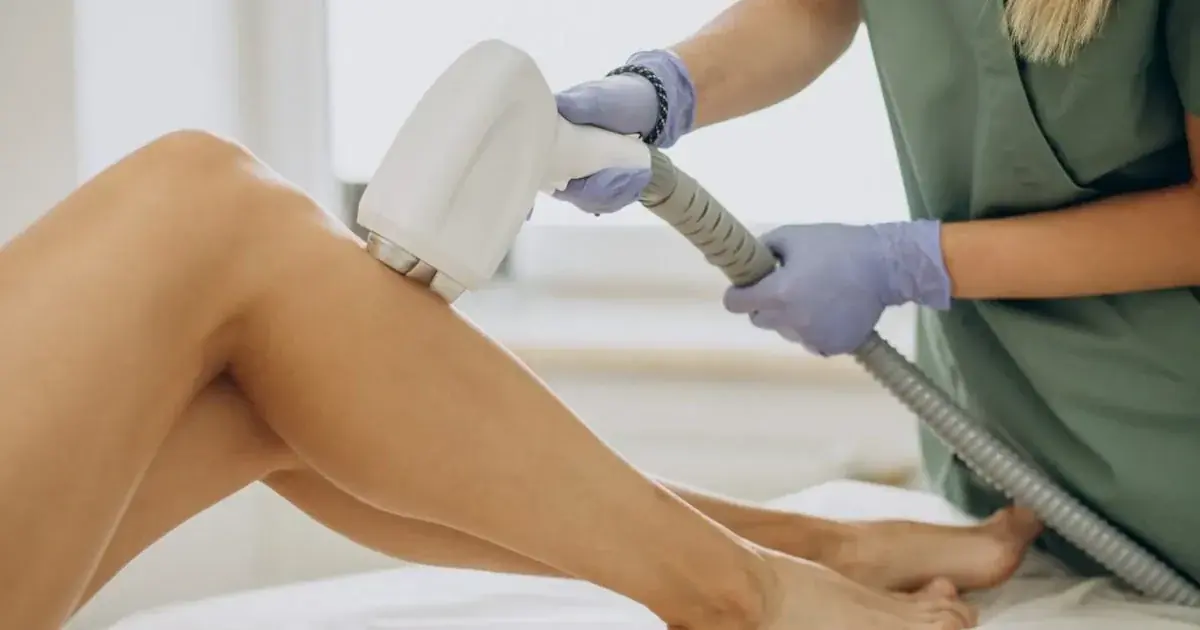
The laser handpiece is glided smoothly over the treatment grid. With advanced in-motion technology and integrated sapphire chill tips, patients experience a sensation comparable to a warm massage with intermittent snapping pinches. Post-treatment, minor perifollicular erythema (small red bumps around hair pores) is normal and typically resolves within a few hours.
Important clinical limitations: White & grey hair
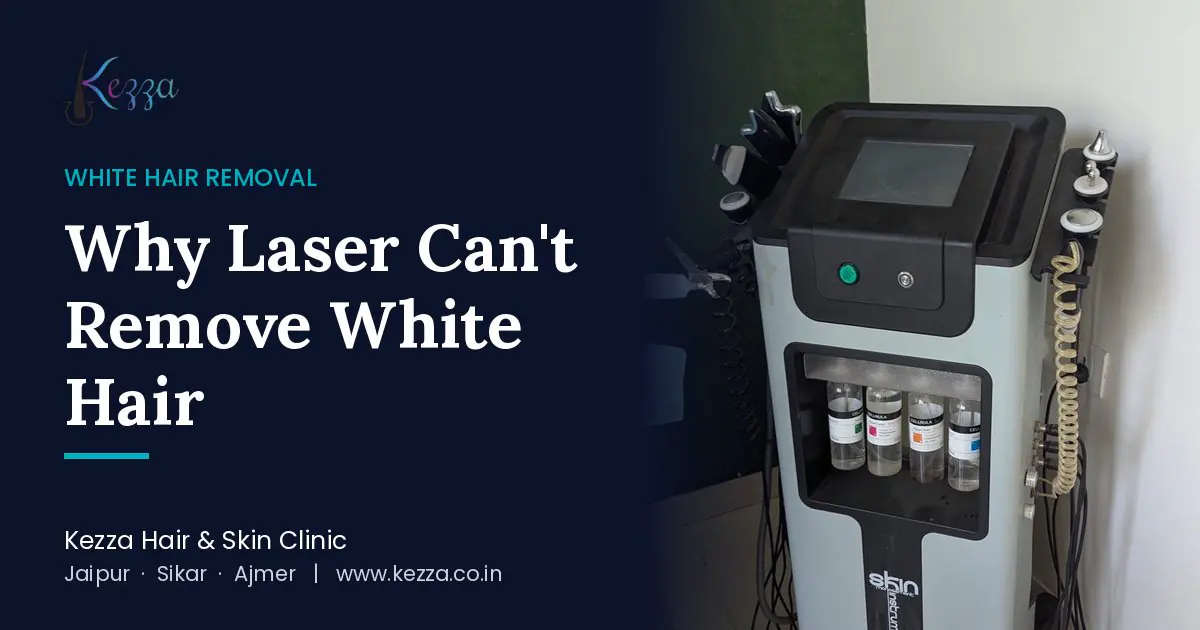
Because selective photothermolysis relies on melanin as its energy absorber, standard lasers cannot treat white, grey, blonde or red hairs. If you have grey or white facial hair, laser treatments will not work. In these cases, Kezza Clinic provides specialized white hair reduction utilizing galvanic and thermolysis electrolysis, which destroys the germinative cells with a micro-probe regardless of pigment.
Pre- and post-treatment rules
- No plucking or waxing for 3 to 4 weeks: Shaving is fine, but do not remove the hair root.
- Avoid intense sun tanning: Fresh tans increase epidermal melanin, increasing heat absorption at the surface.
- Avoid hot showers and saunas for 24 hours: Allow follicular heat to dissipate naturally.
- Apply sunscreen: Protect treated areas with SPF 50 sunscreen to maintain even skin tone.
Consult our laser specialists at Kezza
At Kezza Hair & Skin Clinic, all laser procedures are supervised by experienced aesthetic physicians using calibrated, certified laser technology. Consultations and patch tests are available at our Jaipur, Sikar and Ajmer clinics. Learn more about our laser hair reduction packages or view our skin services.
Considering clinical treatment?
Our aesthetic physicians and surgeons provide personalized clinical assessments at our Jaipur, Sikar and Ajmer clinics.
Sources
- Journal of the American Academy of Dermatology: Lasers in dermatology and hair reduction
- Dermatologic Surgery: Long-term efficacy of diode laser hair reduction across skin phototypes
- Cochrane Database of Systematic Reviews: Interventions for hirsutism and unwanted hair
- American Academy of Dermatology: Laser hair reduction overview and aftercare
This article is general health information, not a diagnosis or a substitute for a consultation. Treatment suitability, number of sessions and results vary from person to person; please speak to a doctor about your own situation.
Kezza Hair & Skin Clinic is a doctor-led hair, skin and aesthetics clinic with branches in Jaipur, Sikar and Ajmer. Meet our doctors. Related treatments: Laser hair reduction in Jaipur · White hair reduction · Electrolysis therapy · Skin services · Full body laser hair removal